




Asian stocks mixed as Trump-Xi summit yields no major breakthroughs
Asian stocks were mixed on Thursday as investors assessed the outcome of the Trump-Xi summit, which yielded no major breakthroughs on trade or Taiwan, while Tokyo's Nikkei hit a fresh intraday record.
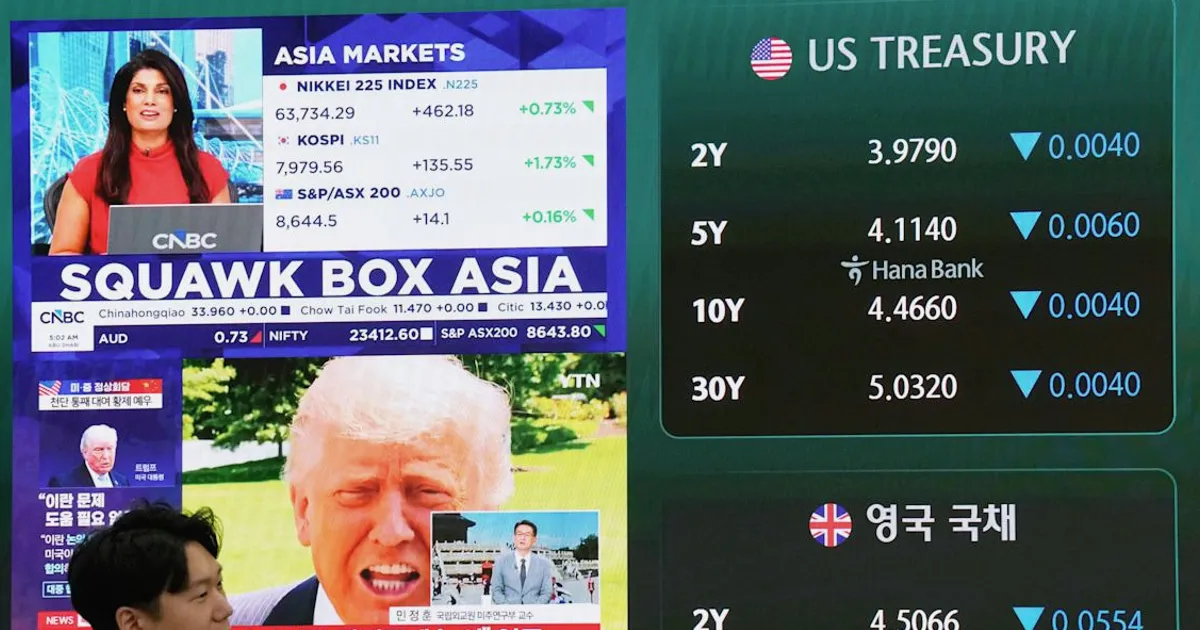
Asian stocks were mixed on Thursday as investors digested the outcome of the summit between U.S. President Donald Trump and Chinese leader Xi Jinping in Beijing, which yielded no major breakthroughs on trade or Taiwan. The meeting, held at the Great Hall of the People, covered U.S.-China relations and regional stability, but analysts had not expected significant progress. The lack of a concrete agreement leaves the trade dispute unresolved, adding to the cautious tone across equity markets.
For energy traders, the absence of a clear trade deal outcome keeps uncertainty over global demand intact, particularly for crude oil and refined products. China is the world's largest crude importer, and any escalation in trade tensions could weigh on demand growth, especially at a time when the International Energy Agency has already trimmed its demand forecasts. The mixed performance in Asian equities reflects cautious sentiment, which may spill over into commodity markets. In the physical crude market, the Brent-WTI spread has widened as U.S. exports surge, while U.S. Strategic Petroleum Reserve levels remain near 40-year lows, limiting the government's ability to intervene in supply disruptions. Meanwhile, crack spreads for gasoline and diesel have narrowed, indicating weaker refining margins that could reduce crude processing runs. OPEC+ spare capacity, largely held by Saudi Arabia and the UAE, provides a buffer but remains concentrated, and any coordinated output changes will depend on how the group interprets demand signals from China. Traders can track real-time price moves on NowPrice's live fuel dashboard to monitor how these geopolitical developments affect energy prices.
Looking ahead, markets will focus on further details from the summit and any follow-up statements from both sides. Key data releases next week, including Chinese industrial production and U.S. crude inventory reports, will provide additional cues on demand and supply dynamics. Investors will also watch for any shifts in OPEC+ production policy as the group prepares for its next meeting, with Saudi Arabia and Russia closely coordinating to manage market balances. The shape of the futures curve—whether in contango or backwardation—will signal whether the market expects oversupply or tightness, while China's marginal demand for crude, often reflected in independent refinery runs, will be a critical indicator of actual consumption trends.