




Canada employment drops 17.7K vs 15.0K estimate; jobless rate rises to 6.9%
Canada's employment fell by 17.7K in April, missing the 15.0K gain estimate, while the unemployment rate climbed to 6.9% from 6.7%, pressuring the Canadian dollar.
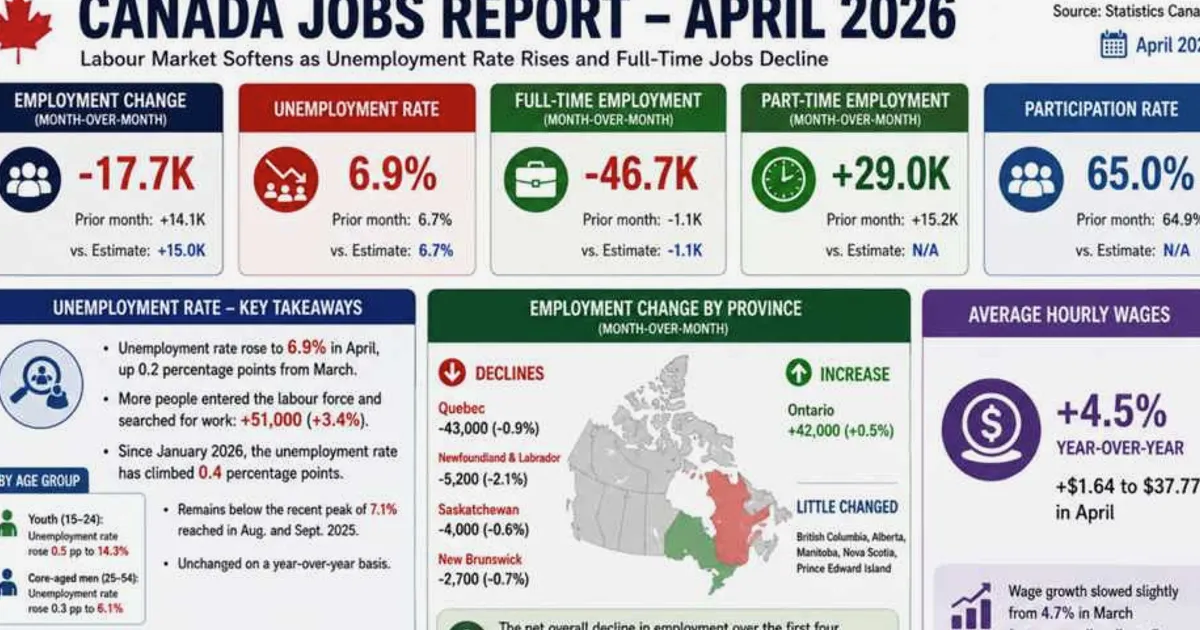
Canada's labor market unexpectedly contracted in April, with employment falling by 17,700 jobs against expectations of a 15,000 gain, while the unemployment rate rose to 6.9% from 6.7%, according to Statistics Canada's Labour Force Survey. The weakness was concentrated in full-time positions, which declined sharply, underscoring a deterioration in the quality of job creation. The data marks a clear miss relative to consensus and suggests the economy is losing momentum after a period of relative resilience.
For interest rate and central bank policy traders, this report reinforces expectations that the Bank of Canada may need to cut rates sooner or more aggressively than previously anticipated. A softer labor market reduces inflationary pressures and weakens the case for maintaining restrictive policy. The Canadian dollar weakened immediately after the release, with USDCAD breaking above 1.3665 to hit a new weekly high. Live rates prices on NowPrice show how the market is reacting in real time, with the pair now testing the 38.2% Fibonacci retracement of the decline from the April high near 1.3708. A sustained move above that level would open the door to the 100-day moving average at 1.37198, a key technical barrier.
Looking ahead, traders will focus on upcoming Canadian inflation data and the Bank of Canada's next policy decision in June. If employment continues to soften and price pressures ease, the odds of a rate cut will rise further. On the technical side, the USDCAD's ability to hold above the 1.3665 breakout zone will be critical. A failure to sustain gains could signal that the market has already priced in much of the weakness, but for now, the bias remains tilted toward a stronger US dollar against the loonie.