




Iranian Regime Believes It Can Outlast Trump, Alhasan Says
Iranian regime believes it can outlast President Trump, rejecting peace proposals and threatening a fragile ceasefire, according to senior fellow Hasan Alhasan.
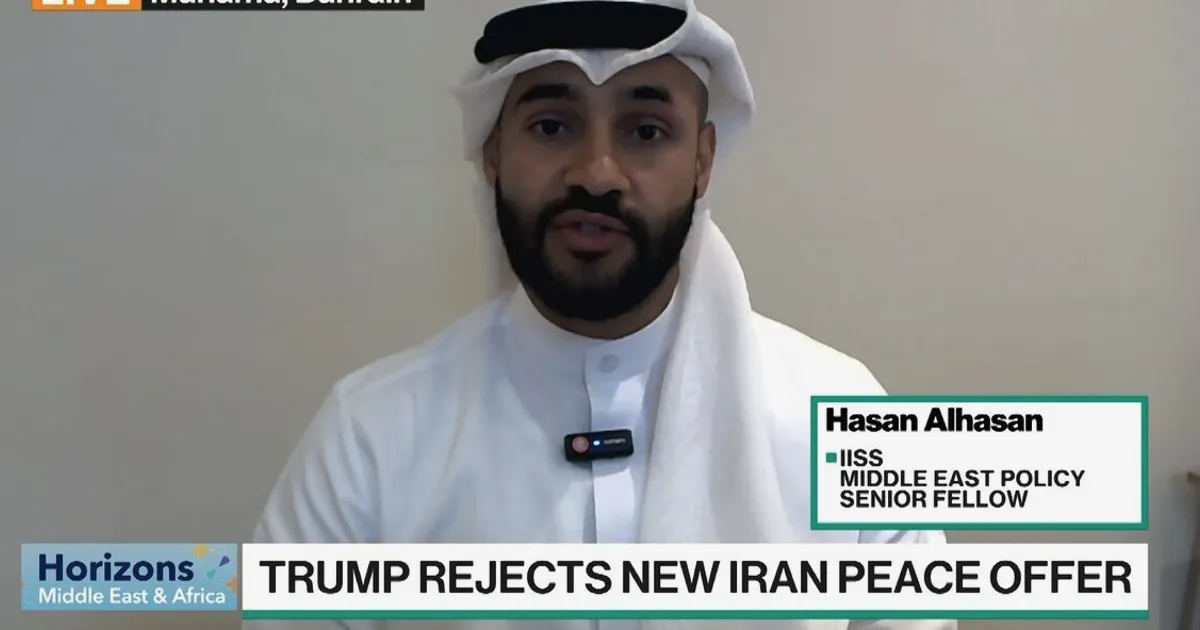
The Iranian regime believes it can outlast President Donald Trump, rejecting US peace proposals and threatening a fragile ceasefire after 10 weeks of conflict, according to Hasan Alhasan, Senior Fellow for Middle East Policy at the International Institute for Strategic Studies.
Alhasan told Bloomberg that Iran's leadership calculates that Trump's political timeline is limited, and they can wait out his administration. This assessment comes as both sides have rejected each other's peace proposals, raising the risk of renewed hostilities. The Gulf Arab countries are closely watching the developments, concerned about regional stability and the potential for escalation. For traders monitoring geopolitical risk, the breakdown in US-Iran talks introduces uncertainty that could impact oil prices and safe-haven assets. While this is not a direct rates story, any sustained rise in oil prices would feed into inflation expectations, potentially influencing central bank policy. The Federal Reserve, operating under its dual mandate of price stability and maximum employment, would be forced to reassess its rate path if oil-driven inflation persists. Higher oil prices also compress real yields and steepen the yield curve by lifting breakeven inflation rates, while the term premium may rise as uncertainty over the inflation outlook increases. Additionally, the Fed's balance sheet runoff could amplify market dislocations if geopolitical shocks trigger liquidity strains, as seen during past oil price spikes. Swap spreads may widen as dealers hedge inflation risk, and the ECB's Transmission Protection Instrument (TPI) could be activated if energy price shocks fragment euro-area bond markets. Traders can track the impact on crude oil and gold prices via NowPrice's live rates dashboard. The next key event will be any further diplomatic moves or military actions that could shift the risk premium in energy markets. A full-scale conflict could push oil above $100 per barrel, triggering a risk-off move that flattens yield curves globally as investors flee to duration. Conversely, a diplomatic breakthrough would unwind the risk premium, weighing on crude and gold while boosting risk assets. The interplay between geopolitical developments and central bank responses will be critical for rates traders in the coming weeks.