




South Korea 10-Year Yield Tops 4% on Rate-Hike Bets From Oil Shock
South Korea's 10-year bond yield breached 4% for the first time since 2023 as oil price spikes from the Iran conflict fuel expectations of aggressive rate hikes by the Bank of Korea.
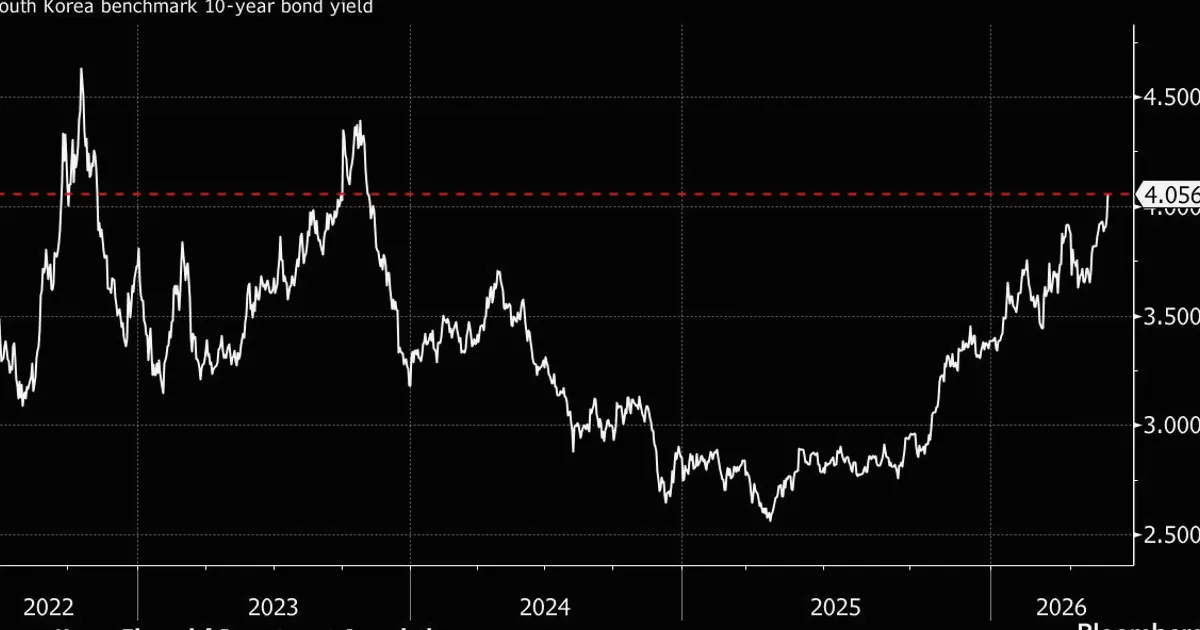
South Korea's 10-year government bond yield rose above 4% for the first time since late 2023, driven by growing expectations that the Bank of Korea will need to hike interest rates more aggressively to counter inflationary pressures from a surge in oil prices linked to the Iran conflict.
The move reflects a broader repricing in Asian bond markets as crude oil spikes above $90 per barrel, raising import costs for energy-dependent economies like South Korea. Higher fuel prices feed directly into consumer inflation, forcing central banks to tighten monetary policy sooner or more sharply than previously anticipated. For fuel traders, this yield jump signals potential headwinds for economic growth, which could cap further oil price gains in the medium term. However, the immediate supply risk from the Middle East remains the dominant driver for crude. NowPrice's real-time fuel quotes show Brent crude holding near recent highs as markets assess the escalation.
Traders should watch for any diplomatic developments in the Iran situation that could ease supply fears, as well as upcoming Bank of Korea policy meetings. A sustained break above 4% for the 10-year yield could trigger further selloffs in Korean bonds and weigh on the won. Key data releases include South Korea's consumer price index for April, due next week, which will test whether inflation expectations are indeed accelerating.