




Philippine Peso Weakness Persists Despite Rate Hike Bets on Energy Costs
The Philippine peso is expected to fall further as high energy import costs outweigh the impact of anticipated central bank rate hikes.
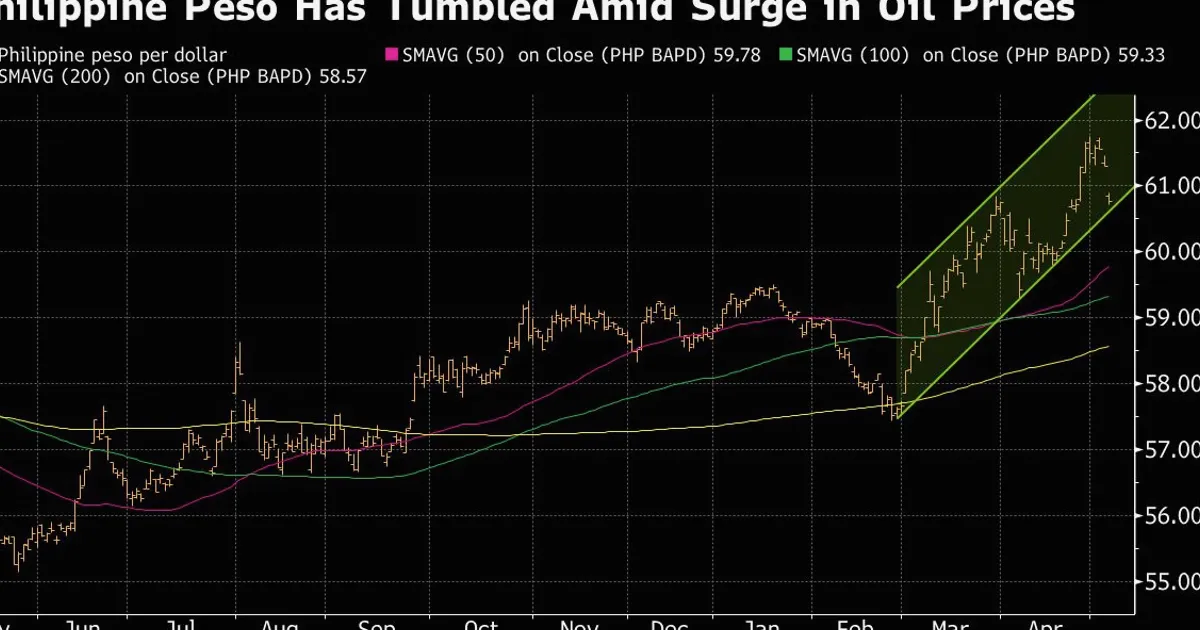
The Philippine peso is on a weakening trajectory that defies expectations of further rate hikes by the central bank, as the country's heavy reliance on imported energy leaves it vulnerable to elevated global oil and gas prices. Analysts point to the outsized impact of high energy costs on the Philippines' trade balance and inflation, which are undermining the usual support that higher interest rates provide to a currency. This dynamic highlights a key challenge for energy-importing economies in the current commodity cycle.
For oil, gas and energy commodities traders, the peso's weakness is a signal of broader demand-side pressures in the region. A depreciating peso makes fuel imports more expensive in local currency terms, potentially squeezing margins for domestic refiners and distributors. It also raises the cost of living, which can dampen consumer demand for fuel over time. Live fuel prices on NowPrice show how the market is reacting in real time, with traders closely watching the peso-dollar exchange rate as a proxy for Philippine energy demand.
Looking ahead, traders should monitor the Bangko Sentral ng Pilipinas' next policy meeting for any shift in rhetoric, as well as monthly trade data to gauge the energy import bill. Global oil price trends, particularly for Brent crude, will also be critical in determining whether the peso can stabilize. Any signs of easing energy costs could provide relief, but for now, the peso's downward pressure remains intact, with implications for fuel pricing across the archipelago.