




 PolymeshPOLYX#500
Polymesh price chart
Technical indicators Calculated from daily closes
Derivatives (Perpetual)
About Polymesh
Polymesh (POLYX) trades at $0.0411 on Binance with a 24-hour volume of $507.05K. With a market capitalization of $54.67M, Polymesh currently ranks #500 among cryptocurrencies. Its all-time high stands at $0.7488.
Frequently asked questions
What is Polymesh?
Polymesh (POLYX) is a cryptocurrency tracked on the Binance exchange. It currently trades at $0.0411 with a 24-hour volume of $507.05K.
What is the current Polymesh price?
The current price of Polymesh is $0.0411 USD on Binance, updated every second via live data feeds.
How much is 1 POLYX in USD?
As of the most recent update, 1 POLYX = $0.0411 USD. The price may have changed by the time you read this — refresh to see the latest tick.
What is the 24h trading volume of Polymesh?
Polymesh has a 24-hour trading volume of $507.05K USD on the POLYXUSDT pair.
Where can I trade Polymesh?
Polymesh is available on Binance under the POLYXUSDT trading pair. NowPrice tracks the live price but does not facilitate trading.
What is the all-time high of Polymesh?
The all-time high of Polymesh (POLYX) was $0.7488 on Mar 31, 2024. The current price is -94.5% from the ATH.
What is the market cap of Polymesh?
The market cap of Polymesh is $54.67M based on a circulating supply of 1.33B POLYX. The fully-diluted valuation (FDV) is $54.67M.
Latest news
See all →
AI attacks shorten crypto audit shelf life, researchers warn
Researchers warn that AI-powered attacks are shortening the shelf life of crypto security audits, urging protocols to reaudit old smart contracts to withstand 2026 threats, as hackers drain millions from defunct DeFi protocols.
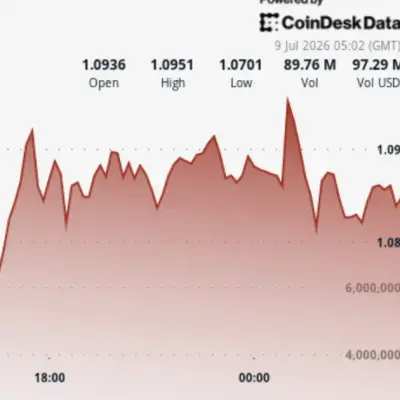
XRP holds near $1.10 as traders eye long-term breakout setup
XRP is trading sideways near $1.09, with buyers defending the $1.00-$1.05 support zone and sellers capping upside, as traders watch for a potential breakout from long-term chart patterns.

Bitcoin Holds $62K as Gold Slides on US-Iran Tensions
Bitcoin held above $62,000 while gold extended its slide to a fourth day as escalating US-Iran military actions boosted oil but weighed on haven assets.