




Brent Crude Oil
USD/bbl · Yahoo Finance
Price history
Other fuels
What drives the price
Brent crude is the global benchmark for light, sweet crude oil produced in the North Sea. ICE Brent (CB/BZ) futures set the reference for roughly two-thirds of internationally-traded barrels, including most Middle East, African and European cargoes. The Brent–WTI spread is the most-watched relative-value indicator in oil.
- OPEC+ supply policy, Middle East geopolitics and Russian export flows dominate the supply mechanics
- European and Asian refinery demand sets the pull, with China the marginal incremental buyer
- Shipping disruptions in the Strait of Hormuz and Red Sea inject risk-premium spikes
- The Brent–WTI spread widens when US logistics constrain WTI; narrows when global tensions hit
Frequently asked questions
What is Brent crude oil?
Brent is a light, sweet crude oil blend produced from fields in the North Sea between the UK and Norway. It is the underlying for ICE Brent (CB/BZ) futures and serves as the global pricing reference for roughly two-thirds of internationally-traded crude.
Why is Brent the global oil benchmark?
Brent is seaborne and easily transportable, unlike WTI which is landlocked at Cushing. This makes Brent the natural reference for Middle East, African and European cargoes shipped globally. About 70% of the world's traded oil prices off Brent.
What is the Brent–WTI spread and why does it matter?
The Brent–WTI spread is the price difference between the two benchmarks. A wider spread (Brent premium over WTI) signals US logistical bottlenecks or global supply tightness; a narrower spread suggests US export capacity has caught up with global demand.
How do Middle East tensions affect Brent?
Roughly 20% of global oil flows through the Strait of Hormuz. Threats to that shipping lane, or attacks on Saudi/Iranian production, inject an immediate risk premium into Brent — often $3-10/barrel within hours.
Latest news
See all →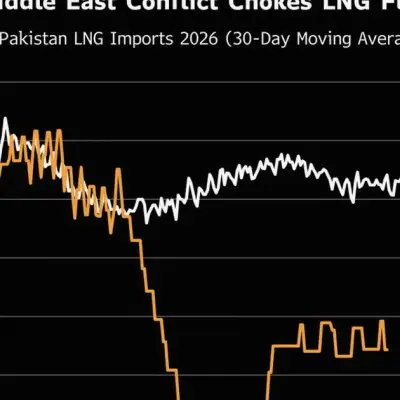
Pakistan Seeks Urgent LNG Cargo as Hormuz Attacks Disrupt Supply
Pakistan issues an urgent tender for an LNG cargo after renewed hostilities in the Strait of Hormuz disrupt supply, raising concerns over Asian spot LNG prices and energy security.

Deutsche Bank Eyes India, Indonesia Bonds on Oil Below $70
Deutsche Bank's private arm signals it will buy emerging Asia bonds if oil stays below $70, as lower crude reduces inflation and yields in import-dependent economies.

Modi and Albanese Pledge Deeper Economic, Defense, Energy Ties
Indian PM Modi and Australian PM Albanese met in Melbourne to deepen economic, defense, and energy cooperation, signaling stronger bilateral ties.
About this benchmark
Brent Crude Oil is one of the principal benchmarks for energy markets. NowPrice publishes the live futures price (USD/bbl) along with intraday range and a 24-hour / 7-day / 30-day price-history chart. Data is sourced from Yahoo Finance and refreshed every 5 minutes during market hours.