




Bonfire Coffee Opens Larger Roastery in Glenwood Springs
Colorado-based Bonfire Coffee has opened a larger roastery and retail shop in Glenwood Springs, featuring a new Loring S15 Falcon roaster to boost production capacity.
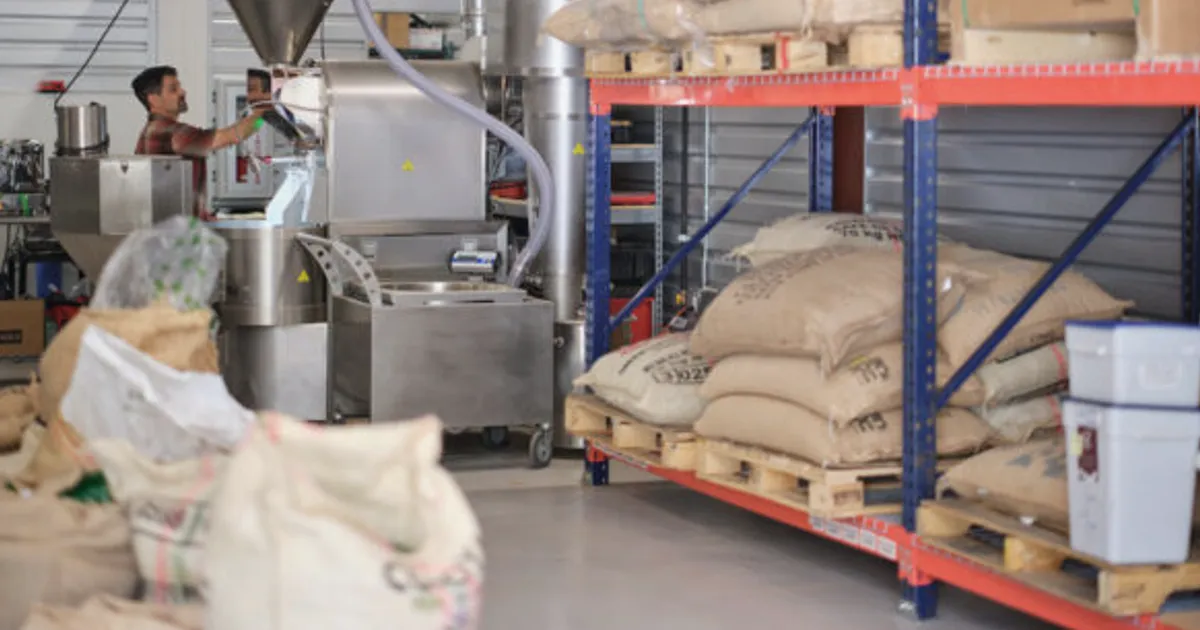
Colorado-based Bonfire Coffee has opened a larger roastery and retail shop in Glenwood Springs, marking a significant expansion for the specialty coffee company. The new facility features a Loring S15 Falcon roaster, which will allow the company to increase production capacity and meet growing demand. The Loring S15 Falcon is a highly efficient, direct-fire roaster that uses advanced technology to reduce energy consumption by up to 80% compared to traditional drum roasters, while providing precise control over roast profiles. This upgrade positions Bonfire Coffee to scale its operations without compromising on the quality that defines the specialty coffee segment, where consistency and flavor nuance are critical differentiators.
The expansion comes as Bonfire Coffee continues to build its presence in the Rocky Mountain region. The new roastery and retail space replaces a previous location, offering more room for roasting operations and a larger customer-facing area. The Loring S15 Falcon roaster is known for its efficiency and precision, enabling the company to maintain quality while scaling up. This move reflects a broader trend in the specialty coffee industry, where roasters are investing in larger facilities to capture market share as consumer demand for premium, locally-sourced coffee grows. In the US, the specialty coffee market has seen steady annual growth of around 5-7% over the past decade, driven by consumers willing to pay a premium for traceability and artisanal production methods.
For coffee traders and investors, this move signals continued growth in the specialty coffee sector, particularly in the US market. Bonfire Coffee's investment in larger facilities reflects broader industry trends toward premiumization and local sourcing. NowPrice's live commodities prices and charts show how coffee futures are reacting to supply and demand dynamics, providing context for such expansions. Arabica coffee futures, traded on the ICE, have been volatile due to weather concerns in major producing regions like Brazil and Vietnam, but the specialty segment often commands higher prices and is less sensitive to commodity swings. Moving forward, the company's ability to leverage its new capacity will be key to its competitive positioning in the region, as it seeks to differentiate through quality and sustainability in a crowded market.