




Bitcoin Implied Volatility Drops to 7-Month Low Despite Macro Risks
Bitcoin's 30-day implied volatility index BVIV has fallen to 38%, its lowest since October 2025, signaling traders expect calmer price action despite ongoing macro risks.
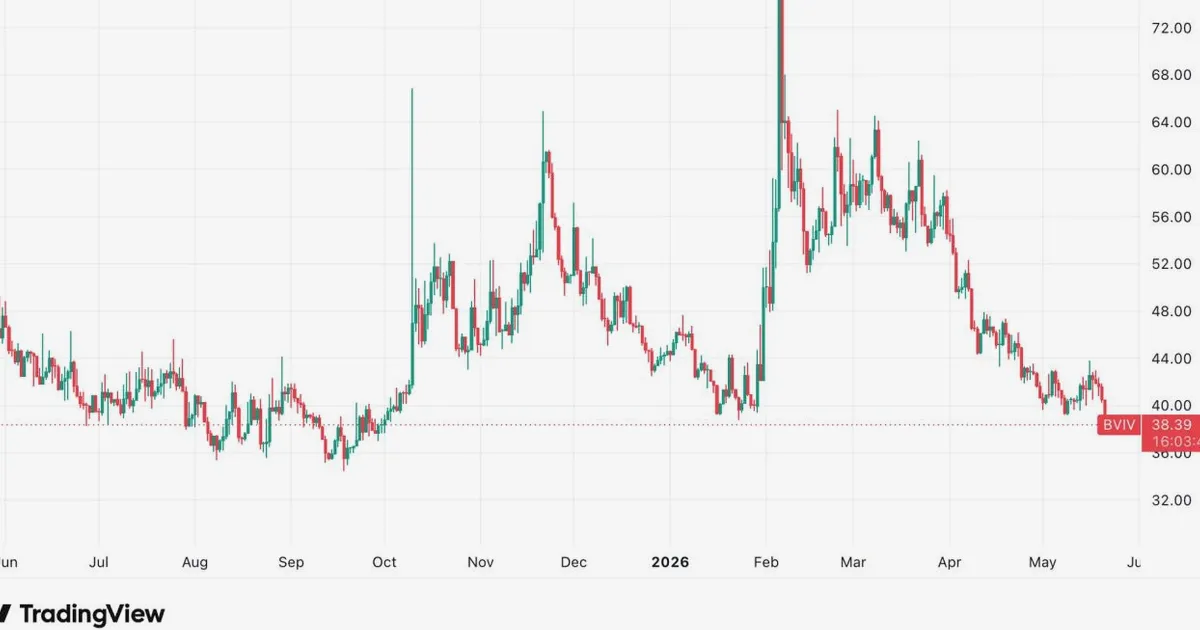
Bitcoin's implied volatility has dropped to its lowest level in seven months, even as macro risks remain in focus. The cryptocurrency's annualized 30-day implied volatility index, BVIV, hit 38%, the lowest reading since October 2025, according to data from Volmex. A falling implied volatility suggests traders anticipate calmer price action and fewer large moves ahead.
Implied volatility reflects the market's expectation of future price fluctuations, and the current decline indicates that options traders are pricing in reduced uncertainty. This comes despite ongoing geopolitical tensions and macroeconomic headwinds that have dominated financial headlines. The disconnect between macro warnings and the volatility metric suggests that crypto market participants may be viewing these risks as less impactful on Bitcoin's near-term price path. For traders monitoring real-time crypto quotes, NowPrice provides up-to-date Bitcoin prices and volatility data.
Looking ahead, the key question is whether this low-volatility regime will persist or if a catalyst—such as a shift in Federal Reserve policy, a major regulatory development, or a significant on-chain event—could spark a volatility spike. Historically, extended periods of low implied volatility have sometimes preceded sharp moves. Traders should watch for any divergence between implied and realized volatility, which could signal an impending breakout.