




Adnoc LNG Tanker Resumes Signal in Persian Gulf After US-Iran Deal
An Adnoc LNG tanker resumed broadcasting its location in the Persian Gulf, signaling increased transparency after the US-Iran interim peace deal reduced regional tensions.
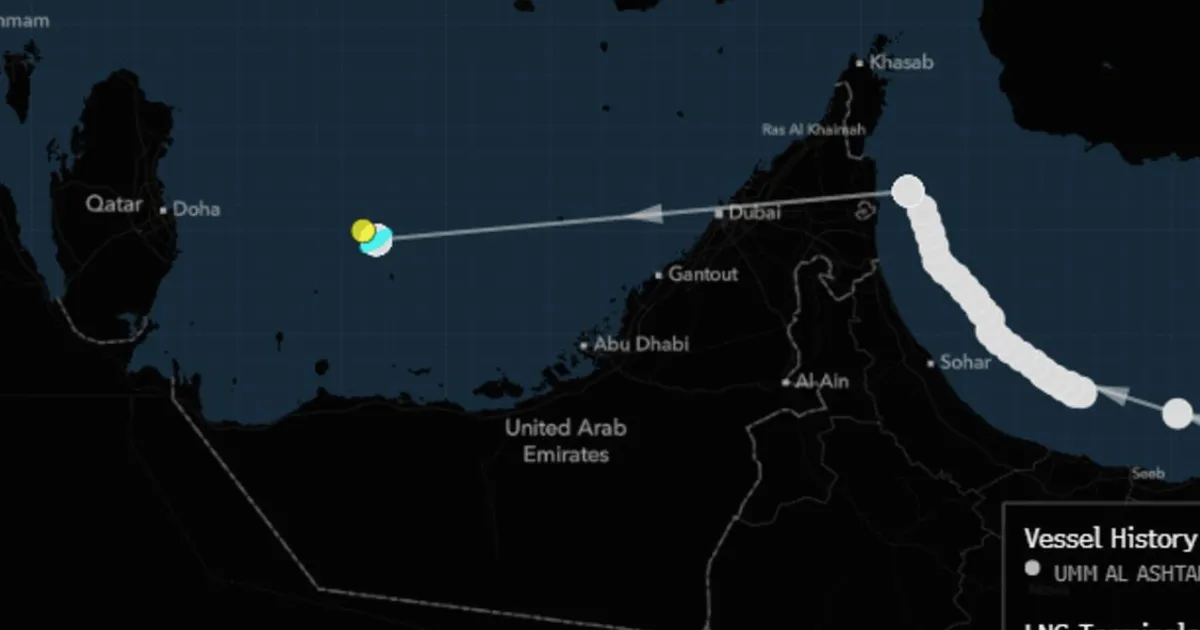
An LNG tanker owned by Abu Dhabi National Oil Co. (Adnoc) has resumed broadcasting its location in the Persian Gulf, marking a return to transparency for vessels in the region following the interim peace deal between the United States and Iran.
The vessel, which had previously stopped transmitting its Automatic Identification System (AIS) signal, began sending data again in recent days. The move comes after the US and Iran reached a temporary agreement that has eased tensions in the strategic waterway, which is a critical transit route for global energy supplies. The tanker's renewed signaling suggests that shipping companies are increasingly confident in the security environment, allowing them to operate with greater openness.
For oil, gas and energy commodities traders, the return of AIS data from Adnoc's LNG tanker is a positive signal for market transparency. The Persian Gulf is a chokepoint for about 20% of global LNG trade, and any disruption or opacity in vessel movements can create uncertainty in pricing and supply logistics. Live fuel prices and charts on NowPrice show how the market is reacting to the improved geopolitical climate, with LNG spot prices easing as risk premiums decline. The resumption of AIS signals also helps traders track cargo flows more accurately, reducing the information asymmetry that can lead to price volatility.
Looking ahead, traders will watch for further signs of normalization in the region, including whether other vessels follow suit and resume broadcasting. The interim peace deal is set to expire in a few months, and negotiations for a permanent agreement will be closely monitored. Any setback could quickly reverse the current trend, reintroducing risk premiums into LNG and crude oil prices. For now, the market is pricing in a lower geopolitical risk, but the situation remains fluid.