




Iran to See Broad Financial Gains in US Peace Deal
The US and Iran plan to sign a memorandum of understanding on Friday, allowing Iran to resume oil exports immediately and access a $300 billion economic development program, which could significantly impact global oil supply.
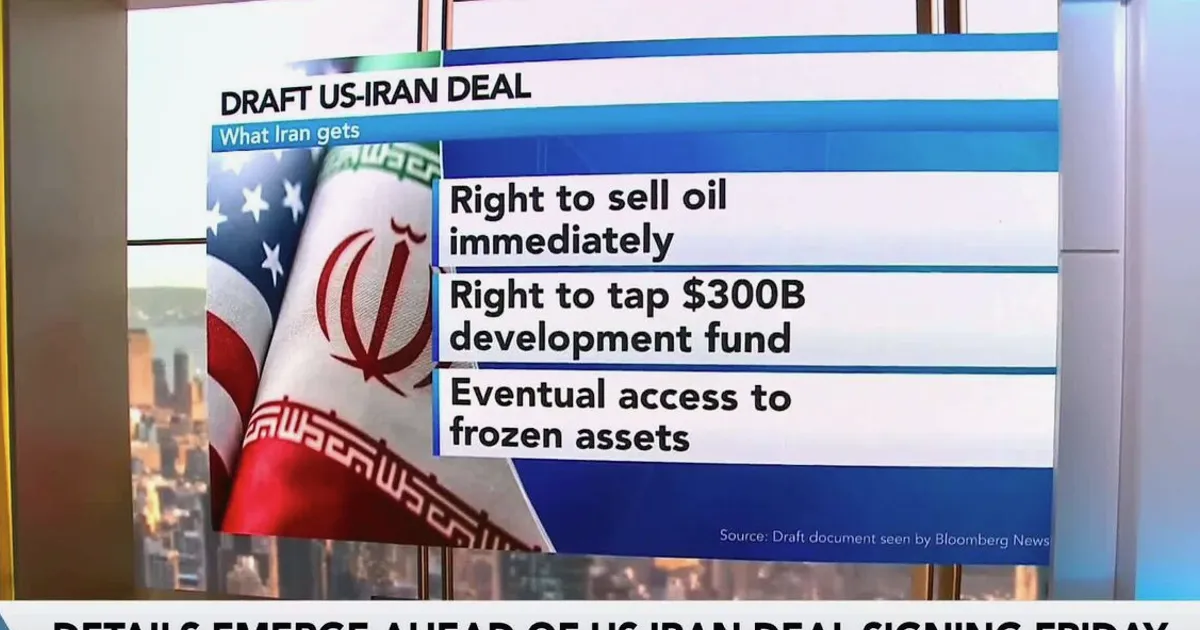
The United States and Iran are set to sign a memorandum of understanding on Friday in Switzerland, marking a potential breakthrough in diplomatic relations. The interim deal would allow Iran to begin oil exports immediately and gain access to a $300 billion economic development program, paving the way for negotiations on a permanent peace agreement.
For energy traders, this development could reshape global oil supply dynamics. Iran, a major OPEC producer, has been under heavy sanctions that have kept its crude exports largely offline. A swift return of Iranian barrels to the market would add significant supply, potentially pressuring prices. The deal also signals a broader easing of geopolitical tensions in the Middle East, which could further influence risk premiums in oil markets. For real-time price updates on crude and refined products, traders can monitor NowPrice's fuel quotes. The potential return of Iranian oil comes at a time when OPEC+ already holds substantial spare capacity, primarily in Saudi Arabia and the UAE, which could be used to manage market balance. The Brent-WTI spread may narrow if Iranian crude, typically priced relative to Brent, enters the market. Meanwhile, US Strategic Petroleum Reserve levels remain near historic lows after the 2022 releases, limiting Washington's ability to intervene. Crack spreads, which measure refining margins, could widen if Iranian crude is discounted, benefiting refiners but pressuring product prices. China, as a key marginal buyer of Iranian oil through grey channels, may shift to official purchases, altering trade flows.
Looking ahead, market participants will focus on the details of the memorandum, including the timeline for export ramp-up and any conditions attached. The subsequent permanent peace negotiations will be closely watched, as any setbacks could reintroduce uncertainty. Traders should also monitor OPEC+ responses, as the cartel may adjust its output strategy to accommodate returning Iranian supply. Saudi-Russia coordination will be critical, as both nations have historically managed output to support prices. The market structure could shift from backwardation to contango if supply overwhelms demand, incentivizing storage. Any delays in Iran's export recovery or renewed tensions could quickly reverse the price impact, making the geopolitical calendar a key variable for crude and product traders.