




Eurozone services contraction eases in June as cost pressures cool
Eurozone services activity contracted at a slower pace in June, with both services and composite PMIs hitting three-month highs, signaling stabilization after two months of output decline.
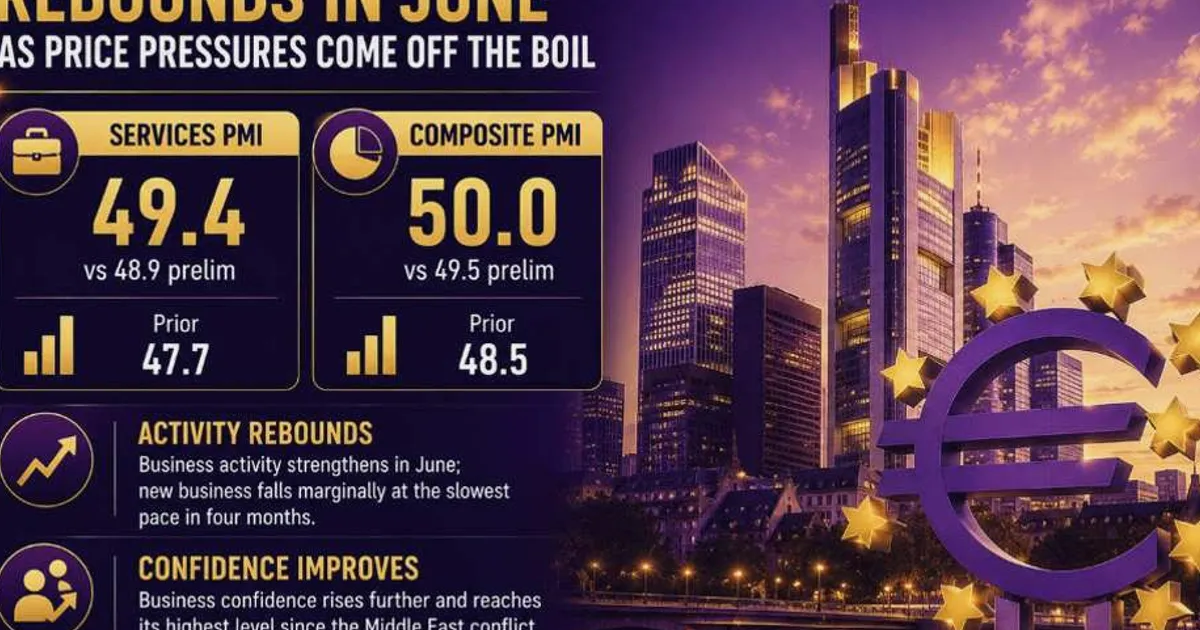
Eurozone services activity contracted at a slower pace in June, with both the services and composite Purchasing Managers' Indexes (PMIs) hitting three-month highs, according to data released Friday. The readings suggest a modest recovery in business activity as the second quarter of 2026 came to a close. The services PMI rose to 49.6 from 49.0 in May, while the composite PMI increased to 49.5 from 48.9, both still below the 50.0 threshold that separates growth from contraction. New business volumes fell for a fourth consecutive month, but the decline was marginal and the joint-slowest seen over that period, matching March's pace. Alongside some stabilization in the manufacturing sector, the data indicate that the wider eurozone economy has stabilized after two months of falling output. Helping to lift the eurozone out of its downturn were sharper expansions in business activity in Italy, Spain and Ireland, while Germany and France remained in contraction.
For currency traders, the easing of the services contraction and cooling cost pressures reduce the urgency for the European Central Bank (ECB) to cut rates further, which could support the euro in the near term. The ECB has been cautious about easing policy amid persistent inflation, and a more resilient services sector may keep the central bank on hold, widening the interest-rate differential with the Federal Reserve if the Fed cuts rates. This divergence in monetary policy could influence the euro-dollar exchange rate through the lens of interest-rate parity, as higher relative rates in the eurozone would attract capital inflows. However, the divergence between core and peripheral economies remains a key theme, with Germany and France still in contraction while Italy, Spain and Ireland expand. This uneven recovery may limit the euro's upside, as it reflects structural imbalances that could weigh on the single currency's long-term outlook. Additionally, the cooling of cost pressures, as input prices rose at the slowest pace in over two years, may signal that the ECB's tightening cycle is having its desired effect, reducing the risk of a wage-price spiral.
Traders should watch upcoming inflation data and ECB commentary for further clues on the rate path. The next ECB meeting is scheduled for July 24, and any hints of a rate cut could weaken the euro. Conversely, if inflation remains sticky, the ECB may hold rates steady, supporting the euro. The real-rate differential between the eurozone and the US is also a key factor, as higher real rates in the eurozone would make euro-denominated assets more attractive. NowPrice's real-time FX quotes provide the latest euro exchange rates against major peers, helping traders monitor these developments.