




Gold tumbles as higher yields, stronger USD weigh on bullion
Gold prices fell sharply as rising bond yields and a stronger US dollar pressured the precious metal, with key resistance near $4,760 capping recent rallies.
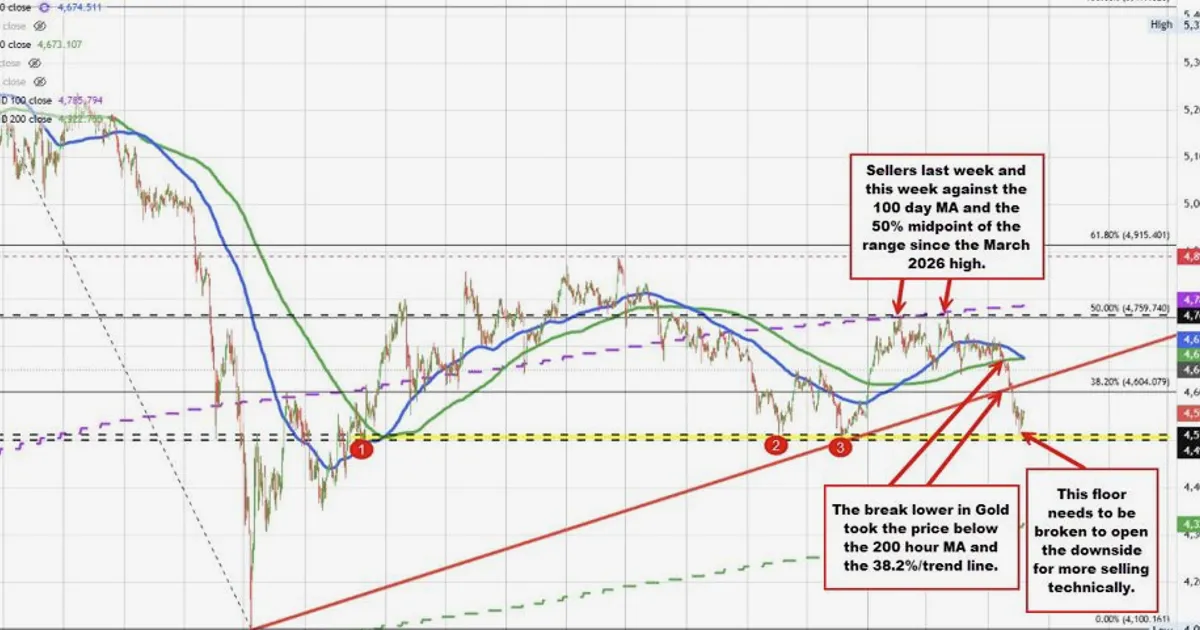
Gold prices tumbled sharply on Friday, breaking lower as rising bond yields and a stronger US dollar weighed on the precious metal. The move followed a volatile week of back-and-forth trading, with rallies repeatedly stalling near the $4,760 area. The $4,760 level was technically significant, marking the 50% midpoint of the decline from the March high to the March low, while also coinciding closely with the 100-day moving average. The inability to break and stay above those key resistance levels gave sellers the green light to reassert control, leading to renewed downside pressure. Higher yields increase the opportunity cost of holding non-yielding gold, while a stronger dollar makes bullion more expensive for holders of other currencies. Traders can monitor real-time gold quotes on NowPrice for the latest levels.
This price action reflects the interplay of real-rate differentials and interest-rate parity. As US real yields rise relative to other economies, the dollar strengthens via capital inflows, creating a headwind for gold. The carry trade, where investors borrow low-yielding currencies to buy higher-yielding assets, can amplify these moves. A stronger dollar also affects terms of trade for commodity-exporting nations, potentially reducing demand for gold as a hedge. The recent failure at $4,760 suggests that the market is pricing in a more hawkish Federal Reserve stance, with expectations of higher-for-longer rates. This divergence between the Fed and other central banks, such as the European Central Bank or Bank of Japan, reinforces the dollar's strength and gold's decline.
Looking ahead, gold's direction will depend on further moves in yields and the dollar, as well as upcoming economic data that could influence Federal Reserve policy. Key support levels to watch include the 200-hour moving average, which provided initial stability, and the March lows. A break below those could open the door to further losses. Traders should also monitor intervention thresholds by central banks, as sudden currency moves could trigger policy responses. The next major catalyst will be US inflation data and Fed speeches, which could shift expectations for rate cuts. If real rates continue to climb, gold may test lower support levels, while any signs of a dovish pivot could spark a reversal. NowPrice provides real-time updates on gold and other assets to help traders stay informed.