




Goldman cuts yen forecast to 165, among most bearish on Wall Street
Goldman Sachs has revised its USD/JPY forecast to 165 by next June, joining the most bearish yen calls on Wall Street as market-implied probability for that level reaches 72%.
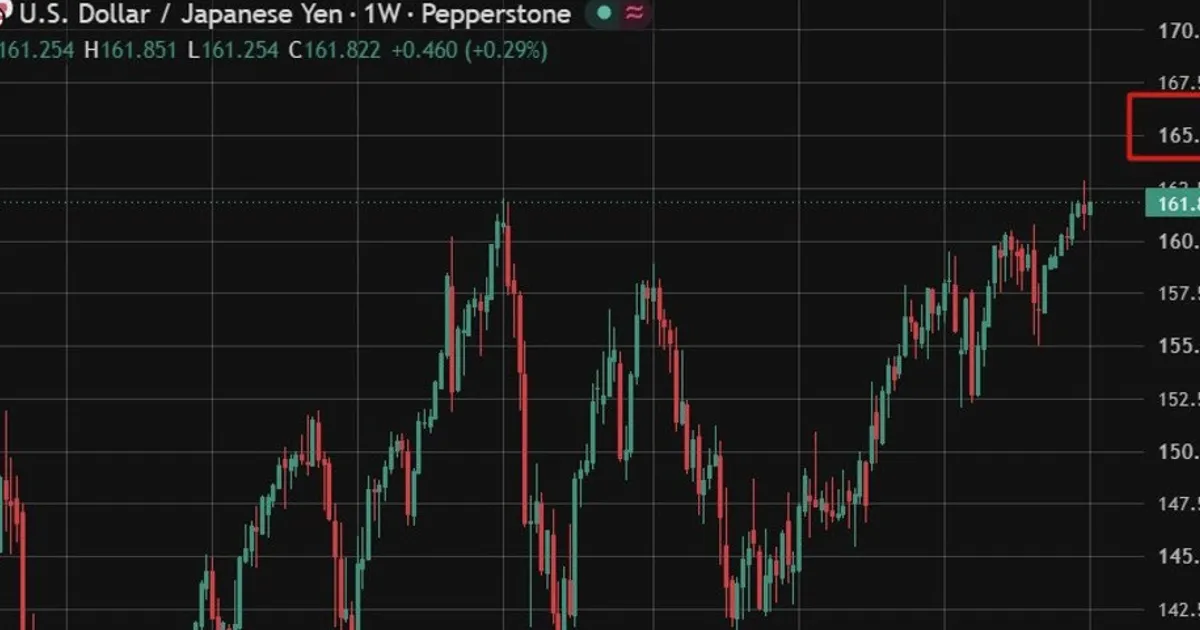
Goldman Sachs has cut its yen forecast to 165 per dollar by next June, making it one of the most bearish calls on Wall Street for the Japanese currency.
The revision places Goldman alongside a growing consensus that the yen will continue to weaken, with the market-implied probability of USD/JPY reaching 165 by June 2027 now around 72%. The bank's view that any official intervention would likely prove short-lived suggests traders may treat verbal or actual yen-buying operations as tactical rather than structural, limiting how much such moves can durably reverse the trend while US-Japan rate differentials and Japanese fiscal pressures persist. Hedge fund short positions remain elevated, reinforcing the bearish momentum.
For foreign exchange traders, the Goldman call underscores the persistent appeal of the carry trade, where investors borrow yen at low rates and invest in higher-yielding currencies. The wide US-Japan interest rate differential continues to drive yen weakness, and the market is pricing in further divergence as the Federal Reserve maintains a hawkish stance while the Bank of Japan remains cautious in normalizing policy. Traders should monitor USD/JPY levels around 160 and 162 as potential resistance, with a break above 162 opening the path toward 165. Any intervention by Japanese authorities could trigger short-term volatility, but the underlying trend suggests selling into rallies may remain the dominant strategy. For real-time pricing and positioning data, check NowPrice's FX page.
Looking ahead, the focus will be on US inflation data and Fed rhetoric for clues on rate differentials, as well as any shift in BOJ policy signals. The Japanese fiscal year-end in March could also introduce repatriation flows that temporarily support the yen, but the broader outlook remains skewed toward further depreciation unless the BOJ delivers a hawkish surprise or US yields decline sharply.