




NZDUSD weakest as war, oil, risk-off and technicals weigh
The NZDUSD pair is under heavy selling pressure as geopolitical tensions, rising oil prices, broad risk-off sentiment, and technical breakdowns combine to push it lower.
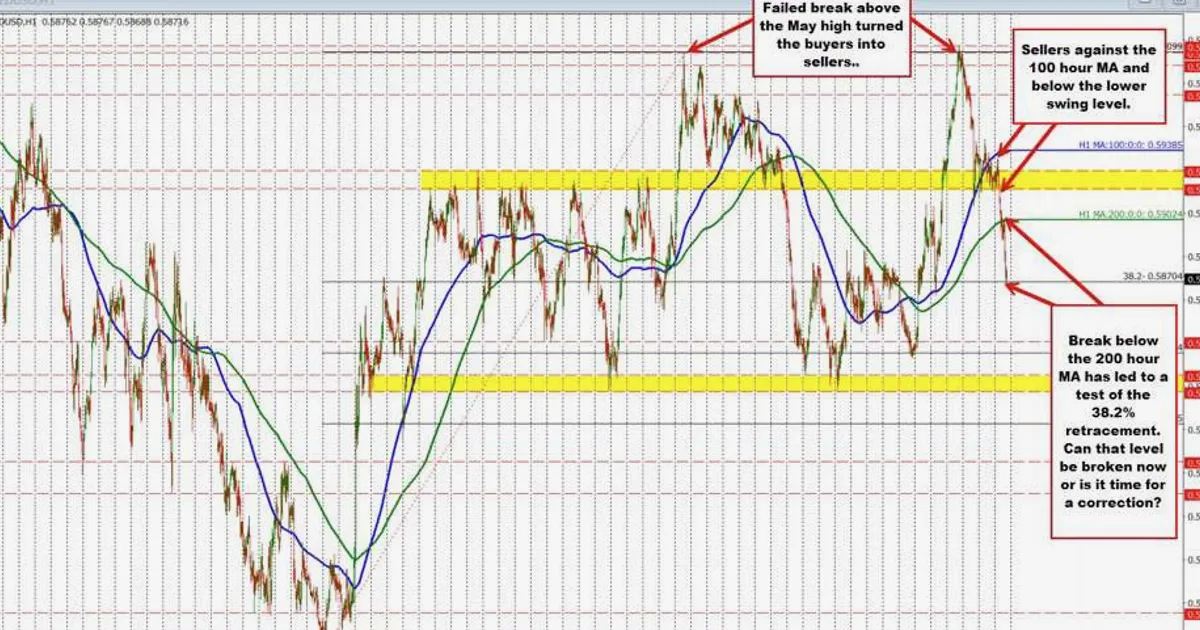
The NZDUSD pair has become the weakest major currency as a confluence of geopolitical tensions, rising oil prices, broad risk-off sentiment, and technical breakdowns weigh heavily on the New Zealand dollar.
The pair briefly pushed above the May high at 0.5889, reaching 0.5893, but the breakout lacked momentum and quickly faded. That failure to attract sustained buying interest set the stage for a more bearish tone heading into this week. On Monday, the pair moved sharply lower before finding support in a key swing area between 0.5918 and 0.5928. Tuesday's price action was largely consolidative, with buyers defending that support zone. However, today's rally attempt stalled just ahead of the 100-hour moving average at 0.5938, with the high reaching only 0.5935. When buyers failed to regain control above that level, they quickly turned into sellers, and the subsequent move lower broke below the support zone, accelerating the decline.
For forex traders, the NZDUSD breakdown is significant because it reflects a broader shift in risk appetite. The New Zealand dollar is a classic risk-sensitive currency, often sold off when geopolitical tensions rise, as seen with the war-related headlines. Additionally, New Zealand's terms of trade are negatively impacted by higher oil prices, as the country is a net oil importer. This dynamic, combined with the risk-off environment, has widened the interest rate differential in favor of the US dollar, as the Federal Reserve maintains a hawkish stance while the Reserve Bank of New Zealand faces headwinds. Live FX prices and charts on NowPrice show the pair trading below key moving averages, confirming the bearish momentum.
Looking ahead, traders will watch for a potential retest of the May low near 0.5850, with a break below that opening the door to the 0.5800 handle. On the upside, the 100-hour moving average at 0.5938 now serves as resistance. Key data releases this week include US ISM services data and New Zealand employment figures, which could provide further direction. Any escalation in geopolitical developments or further oil price spikes could exacerbate the selling pressure on NZDUSD.