




Oil Prices Rise, Tech Shares Look to Bounce Back as Week Begins
Oil prices edged higher on Monday after US-Iran strikes and a truce, while US tech shares showed signs of a rebound ahead of a holiday-shortened week.
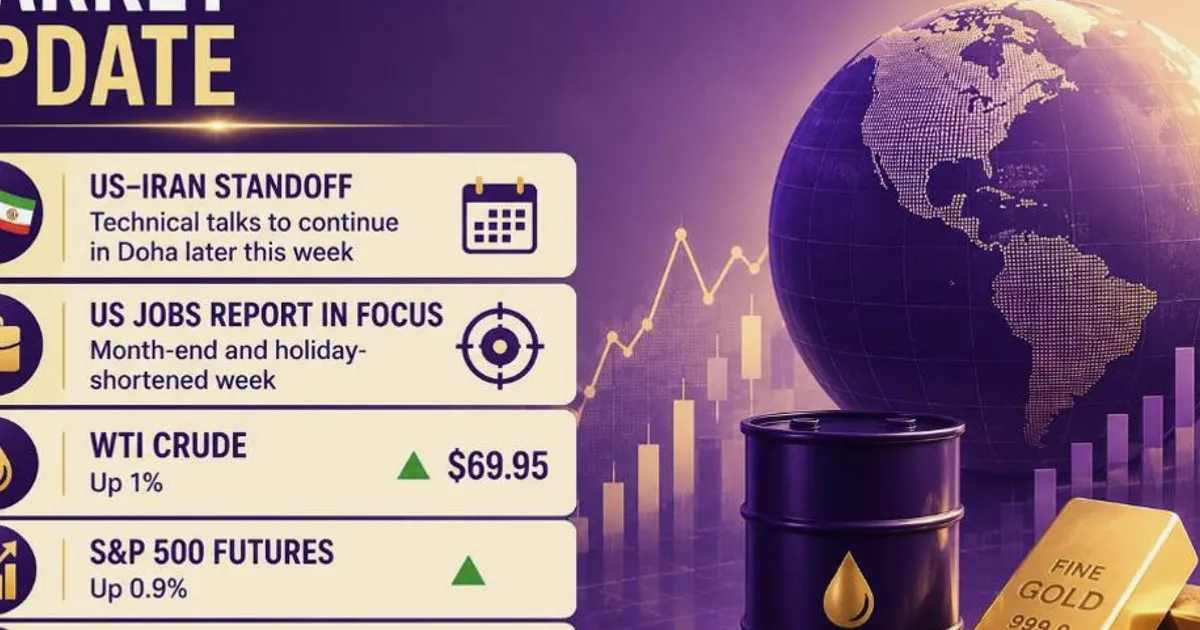
Oil prices rose on Monday as geopolitical tensions in the Middle East remained elevated following a series of strikes between the US and Iran over the weekend. WTI crude gained 1% to trade near $69.95, reflecting renewed concerns about potential disruptions to supply routes in the Strait of Hormuz. The risk premium on oil-sensitive currencies such as the Norwegian krone and Canadian dollar may persist, as higher crude prices improve terms of trade for commodity exporters, while safe-haven flows could support the US dollar and Japanese yen if tensions flare again. This dynamic is reinforced by interest-rate parity: the Federal Reserve's hawkish stance keeps US real rates elevated, widening the real-rate differential versus other G10 currencies and underpinning dollar demand during risk-off episodes.
The US and Iran exchanged strikes before agreeing to a truce, allowing technical talks to resume in Doha starting Tuesday. However, the brief escalation serves as a reminder that any reopening of the Strait of Hormuz will not be straightforward. For currency traders, the risk premium on oil-sensitive currencies such as the Norwegian krone and Canadian dollar may persist, while safe-haven flows could support the US dollar and Japanese yen if tensions flare again. The yen, in particular, remains vulnerable to carry-trade unwinds: if risk appetite deteriorates, leveraged positions funded in low-yielding yen could be liquidated, amplifying JPY gains. Conversely, a sustained truce could trigger a reversal, with oil prices retreating and commodity currencies rallying as the risk premium dissipates. Check NowPrice's fx page for real-time pricing on these pairs.
Looking ahead, the week is holiday-shortened in the US due to Independence Day, but several key events remain. Traders will watch for further developments in US-Iran talks, as well as any shifts in risk sentiment that could drive equity and currency markets. US tech shares are showing early signs of a bounce back, which could support risk-on currencies like the Australian dollar if the rally holds. Central-bank divergence also remains in focus: the Reserve Bank of Australia's next policy decision looms, and any hawkish surprise could widen the rate differential in favor of the Aussie. Meanwhile, intervention thresholds for the yen are being closely monitored; Japanese authorities have previously stepped in near 145 USD/JPY, and a renewed spike above that level could prompt verbal or actual intervention. Traders should also monitor real-rate differentials, as they remain the primary driver of medium-term currency trends.