




PBOK sets USD/CNY central rate at 6.8109, weaker than estimate
The People's Bank of China set the USD/CNY central rate at 6.8109, weaker than the market estimate of 6.7877, signaling a slight yuan depreciation bias.
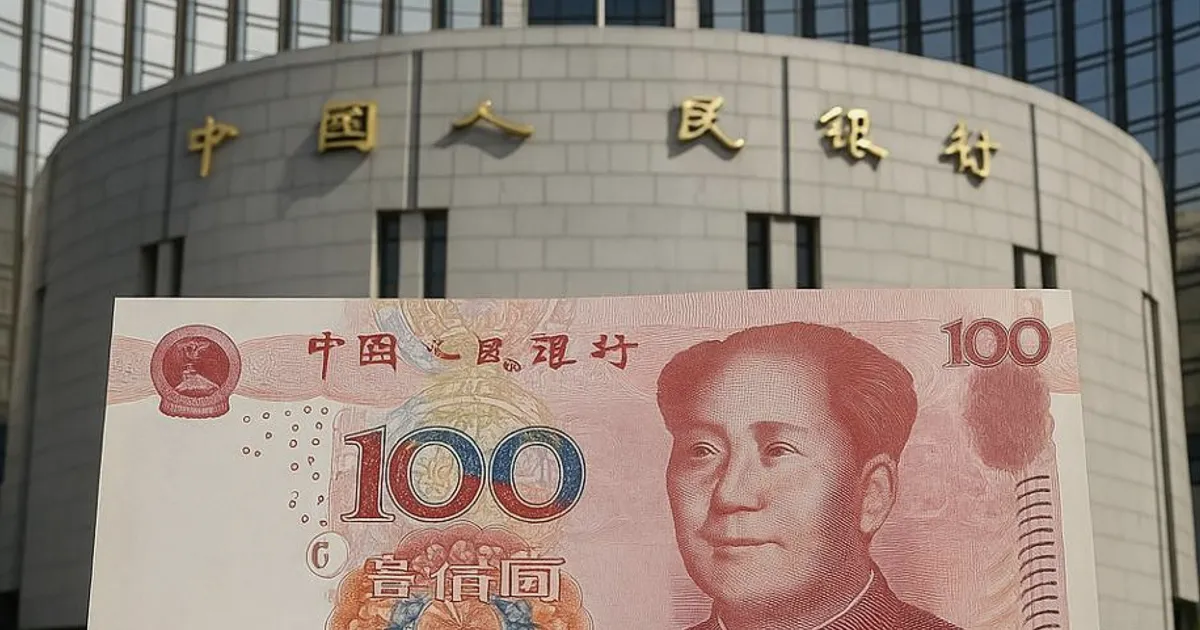
The People's Bank of China (PBOC) set the USD/CNY central parity rate at 6.8109 for Tuesday's trading session, weaker than the market estimate of 6.7877. The fixing came alongside liquidity operations: the PBOC injected 69.5 billion yuan via 7-day reverse repos at an unchanged rate of 1.4% and added 600 billion yuan in overnight reverse repos at 1.25%. This daily fixing mechanism anchors the onshore yuan's trading band of +/-2%, meaning the spot rate can deviate up to 2% above or below the central parity. The deviation from estimates—nearly 23 pips weaker—reflects the PBOC's willingness to guide the yuan lower, a move consistent with managing export competitiveness as the US dollar strengthens on the back of the Federal Reserve's aggressive tightening cycle.
The central rate is a key signal of the PBOC's policy stance. A weaker fixing versus estimates suggests the central bank is comfortable with a gradual yuan depreciation, likely to support export competitiveness amid a strong US dollar. For forex traders, the deviation from estimates can trigger immediate positioning adjustments in USD/CNY and related Asian currency pairs. This dynamic is amplified by interest-rate differentials: while the PBOC has been easing to stimulate domestic growth, the Fed has hiked rates sharply, widening the yield gap in favor of the dollar. Such divergence often fuels carry trades that short the yuan, but a sudden PBOC signal can force rapid unwinding. Traders can monitor live USD/CNY quotes on NowPrice's real-time dashboard to track the market's reaction to the fixing.
Looking ahead, market participants will watch for any further PBOC signals on yuan policy, especially with the US dollar index remaining elevated. The next key data point is China's official PMI readings later this week, which could influence the PBOC's future fixing bias. The ongoing divergence between PBOC easing and Federal Reserve tightening will keep USD/CNY volatility elevated. Additionally, real-rate differentials—adjusted for inflation—will be critical; if Chinese inflation remains subdued while US inflation stays sticky, the dollar's carry advantage persists. Intervention thresholds also matter: the PBOC has historically stepped in when the yuan depreciates too rapidly, often via state-owned banks or by adjusting the fixing. Terms-of-trade pass-through, particularly from commodity imports, could further pressure the yuan if global energy prices rise. Thus, traders should monitor both PBOC commentary and broader macro data for clues on the next directional move.