




RBI likely intervened to sell USD/INR, support rupee
The Reserve Bank of India is suspected of intervening in the forex market by selling USD/INR to stem the rupee's decline, a move that traders are watching closely for further policy signals.
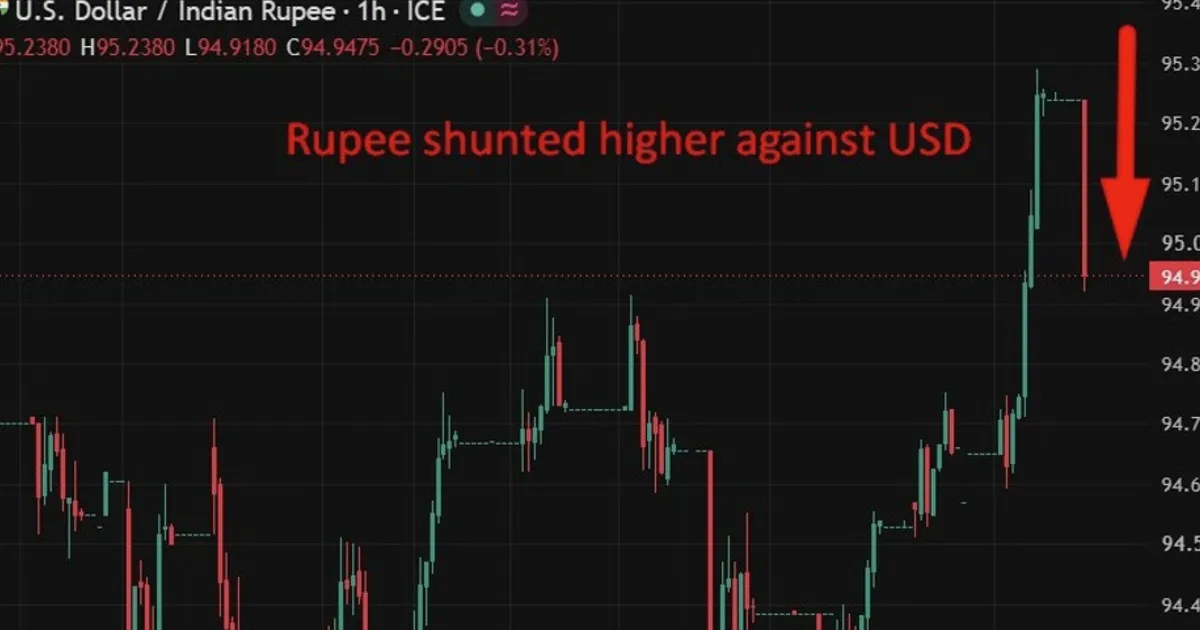
The Reserve Bank of India (RBI) is believed to have stepped into the foreign exchange market by selling USD/INR to support the rupee, according to market speculation. The intervention rumors emerged as the rupee faced renewed pressure, prompting traders to watch for official confirmation. Such operations are typical for central banks managing currencies with limited convertibility, as they seek to prevent excessive volatility and maintain orderly market conditions. The RBI's suspected action comes amid a period of weakness for the Indian rupee, driven by factors such as a strong US dollar and capital outflows. By selling USD/INR, the RBI aims to reduce the exchange rate and provide a floor for the rupee. Traders can monitor the impact of these moves on the NowPrice live FX dashboard to track real-time price action.
The suspected intervention highlights the challenges faced by emerging market central banks when the US dollar strengthens, often due to interest rate differentials and safe-haven flows. The Federal Reserve's hawkish stance has widened the real-rate differential between the US and India, making carry trades less attractive and prompting capital outflows from Indian assets. This dynamic can lead to a self-reinforcing cycle of depreciation, where a weaker rupee increases import costs and fuels inflation, potentially forcing the RBI to tighten monetary policy. By intervening, the RBI aims to break this cycle and stabilize the currency, but such actions are not without costs, as they deplete foreign exchange reserves and may only provide temporary relief if fundamental pressures persist. The terms-of-trade pass-through also plays a role, as a weaker rupee makes imports more expensive, worsening India's trade balance and putting further downward pressure on the currency.
Looking ahead, market participants will focus on any official statements from the RBI regarding its intervention strategy. Key levels to watch include the rupee's recent lows and the central bank's tolerance for further depreciation. Upcoming data on India's trade balance and inflation will also influence the currency's trajectory, as will global risk sentiment and the Federal Reserve's policy path. Traders should also monitor the carry-trade dynamics, as a sustained unwind of carry trades could exacerbate rupee weakness. The RBI's intervention thresholds are closely watched, and any signs of a shift in its approach could trigger sharp moves in USD/INR. Ultimately, the rupee's fate will depend on a combination of domestic fundamentals and global factors, including the pace of Fed rate cuts and the resilience of the Indian economy.