




RBI Intervention Sends Indian Rupee Sharply Higher
The Reserve Bank of India intervened in the forex market, sending the rupee sharply higher as the currency had been under sustained pressure from energy price shocks and global risk aversion.
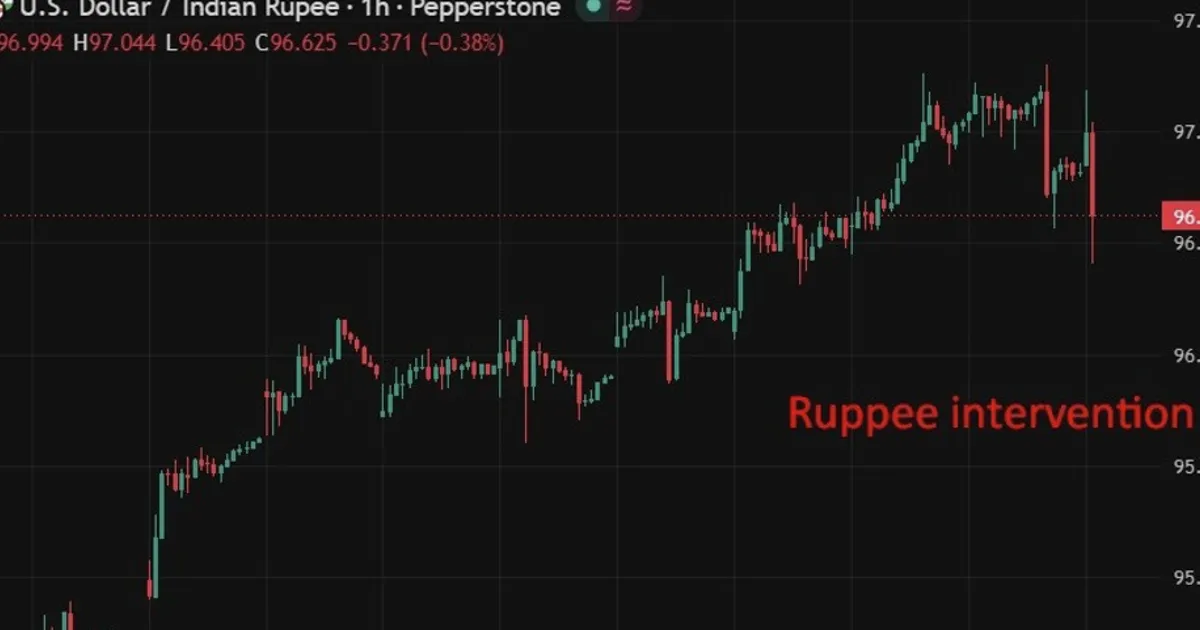
The Reserve Bank of India intervened in the foreign exchange market, sending the rupee sharply higher against the US dollar. The move comes after months of sustained selling pressure on the Indian currency, driven by a confluence of external shocks and domestic vulnerabilities.
The rupee has been under pressure primarily due to the energy price shock following the closure of the Strait of Hormuz after US-Israeli strikes on Iran in late February. India, one of the world's most energy-import dependent major economies, sources the vast majority of its crude oil from overseas, with Middle Eastern suppliers historically accounting for a significant share. The disruption has reduced available supply and pushed up import costs, widening India's trade deficit and fueling rupee depreciation. The RBI's intervention signals its willingness to defend the currency at a certain level, likely to prevent excessive volatility that could destabilize the economy. For forex traders, this intervention creates a short-term floor for the rupee, but the sustainability of the move depends on whether the central bank can stem the underlying outflow pressure. Check NowPrice's fx page for the latest USD/INR quotes and real-time pricing.
Looking ahead, the key factor for the rupee remains the resolution of the Hormuz crisis and the trajectory of global oil prices. Any easing of tensions could relieve pressure on the rupee, while further escalation would likely force the RBI to continue intervening. Traders should also watch for any signs of coordinated intervention or policy measures from Indian authorities. The RBI's next monetary policy decision will be closely scrutinized for any shift in its inflation-growth balance, as higher import costs feed into domestic inflation. The rupee's path will also be influenced by broader risk sentiment and capital flows, with foreign investors already reducing exposure to emerging markets amid global uncertainty.