




Thailand Asset Freeze Raises FX Settlement Risk Questions
Thailand's largest asset-freeze dispute, involving over 20 billion baht seized in a cyber scam probe, raises practical questions about FX settlement risk for fintech firms and regional banks using pooled-payment infrastructure.
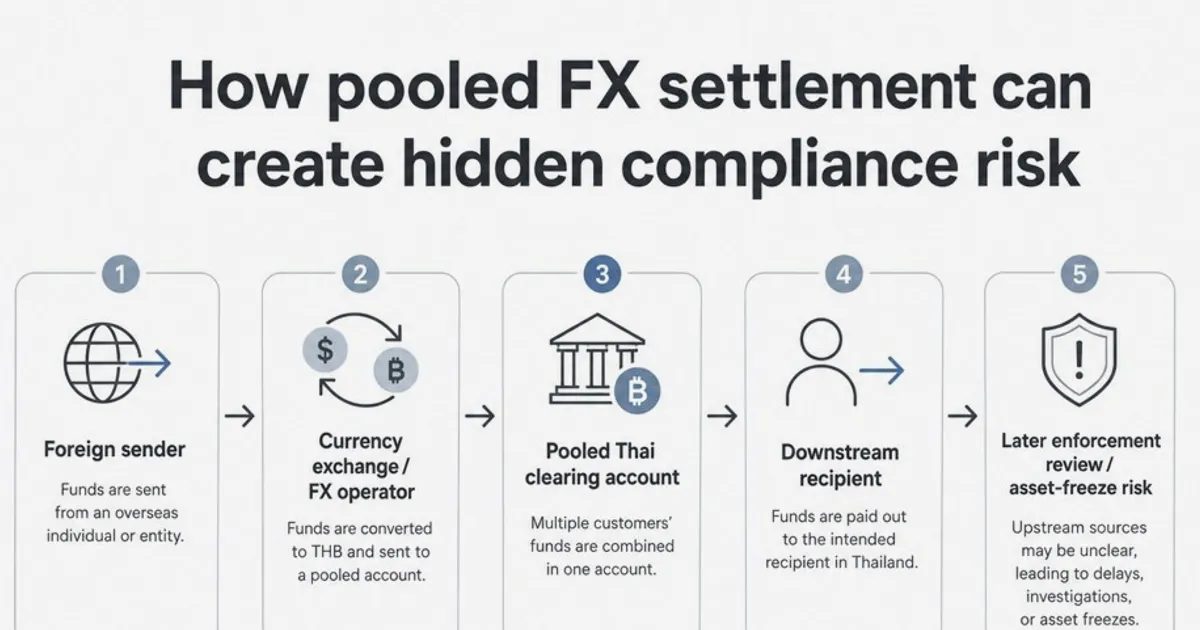
Thailand's largest asset-freeze dispute is raising practical questions about FX settlement risk for fintech firms and regional banks that rely on pooled-payment infrastructure.
Thai authorities have seized or frozen more than 20 billion baht in assets linked to an alleged transnational cyber scam network. The case centers on a contested currency-exchange transfer of around USD 150,000, which authorities traced through shared settlement accounts. The legal team for the affected parties argues that the seizure is disproportionate, while enforcement agencies maintain that pooled-payment systems can be used to launder illicit funds. This has created uncertainty for FX operators and fintech firms that process payments through similar infrastructure, as they now face the risk that legitimate transactions could be caught in regulatory dragnets.
For foreign exchange and currencies traders, the case highlights a less-discussed operational risk: settlement infrastructure that pools multiple transactions can become a channel for regulatory action if authorities trace funds backward. This could lead to delays in cross-border payments, increased compliance costs, and potential liquidity pressures for regional banks involved in FX settlement. The Thai baht may see short-term volatility if the dispute escalates, as market participants reassess the reliability of the country's payment systems. Live FX prices and charts on NowPrice show how the market is reacting to these developments.
Looking ahead, the outcome of this legal case could set a precedent for how regulators treat pooled-payment systems in emerging markets. Traders should watch for any official statements from the Bank of Thailand or the Thai government regarding changes to settlement procedures. Additionally, the case may prompt other Southeast Asian regulators to review their own frameworks, potentially affecting regional FX flows and the cost of cross-border transactions.