




West Red Lake Gold Reports Q1 2026 Results, Madsen Mine Ramp-Up
West Red Lake Gold reported Q1 2026 financial results and provided an operational update on the Madsen Mine ramp-up, with a webcast scheduled to discuss the details.
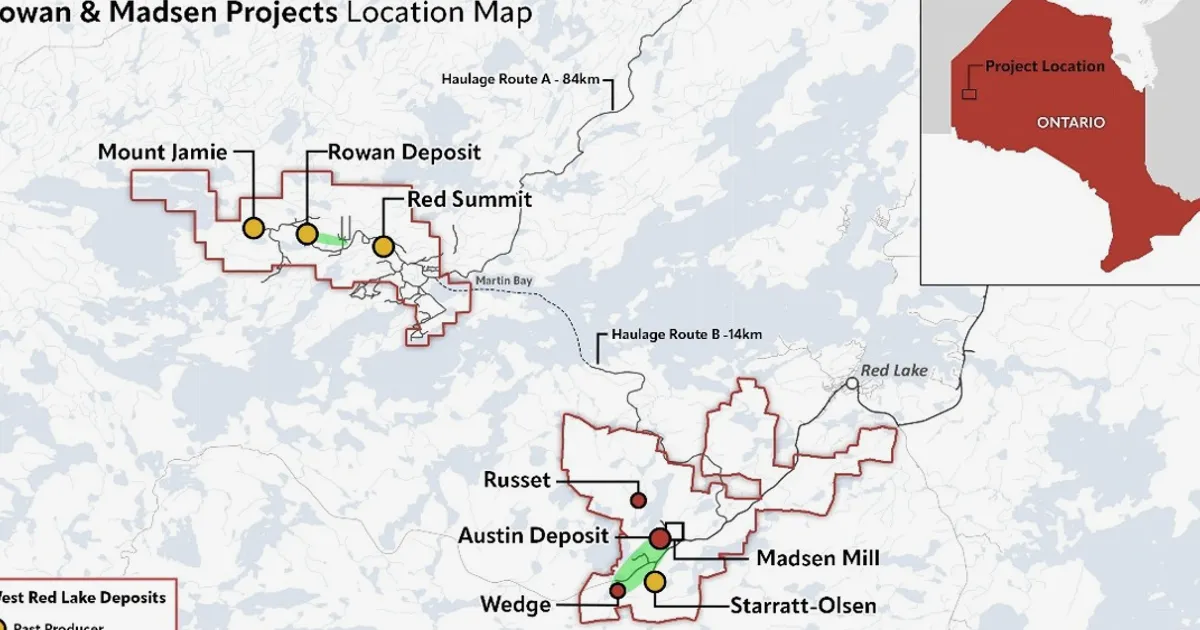
West Red Lake Gold Mines Ltd. announced its financial and operating results for the three months ended March 31, 2026, alongside an operational update on the post-commercial ramp-up of the Madsen Mine in Ontario's Red Lake district. The company sold 6,000 ounces of gold during the quarter, contributing to revenue as it progresses toward full production. A webcast has been scheduled to discuss the results in detail.
The Q1 2026 report marks a key milestone for West Red Lake Gold as it transitions from development to commercial production at Madsen. The company reported revenue from gold sales and provided updates on mining operations, processing throughput, and cost metrics. Investors are closely watching the ramp-up trajectory, as successful execution could significantly enhance the company's cash flow and valuation. The Madsen Mine is a high-grade underground operation, and its performance is critical for West Red Lake Gold's near-term growth.
For gold and precious metals traders, West Red Lake Gold's progress is a microcosm of the broader junior mining sector's health. Successful mine ramp-ups can signal improving supply dynamics, though the impact on gold prices is typically indirect. Traders may monitor the company's cost structure and production guidance as indicators of operational efficiency. For real-time gold pricing context, NowPrice's gold page offers up-to-date spot and futures data.
Looking ahead, the market will focus on West Red Lake Gold's ability to sustain and increase production in the coming quarters. Key metrics to watch include all-in sustaining costs, grade reconciliation, and mill recovery rates. The company's webcast may provide additional guidance on Q2 2026 expectations and any adjustments to the full-year outlook. Broader gold market sentiment will also be influenced by macroeconomic factors such as US interest rate expectations and central bank buying trends.