




Worst Indonesian Credit Volatility in Years Imperils Debt Boom
Rupiah corporate bond volatility has hit a four-year high, threatening to derail record issuance in Southeast Asia's largest economy amid policy swings that have shaken foreign investor confidence.
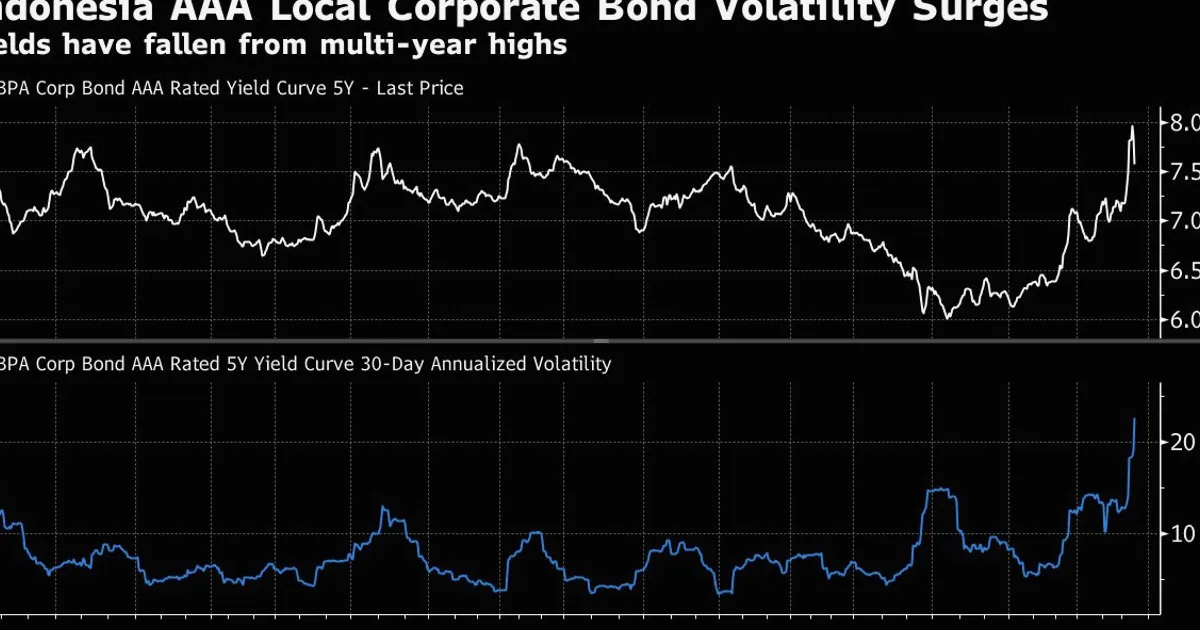
The highest volatility in Indonesian rupiah corporate bonds in four years is threatening to dent record issuance by companies in Southeast Asia’s largest economy. Government policy swings have hurt international investor confidence in Indonesian assets, raising borrowing costs and dampening appetite for new debt. This volatility, measured by the standard deviation of credit spreads, has surged to levels not seen since the pandemic-era turmoil of 2020, reflecting deep uncertainty about fiscal and monetary direction. For context, the Indonesian bond market has grown rapidly in recent years, with corporate issuance hitting new highs as companies sought to lock in low rates. Now, erratic spread movements are forcing underwriters to widen pricing and investors to demand higher risk premiums, potentially choking off the supply of new deals.
For interest rate and central bank policy traders, this volatility signals a widening risk premium on Indonesian credit. When credit spreads become more erratic, it often leads to tighter financial conditions as investors demand higher compensation for uncertainty. This can feed into broader emerging-market rate dynamics, as Indonesia is a bellwether for regional risk appetite. The mechanism at play is straightforward: higher volatility raises the cost of hedging and reduces the attractiveness of carry trades, which can amplify outflows and pressure the rupiah. In turn, Bank Indonesia may face a dilemma between supporting growth and defending the currency, especially if the Federal Reserve remains hawkish. NowPrice live rates and charts show how the market is pricing this increased risk in real time, with the 10-year government bond yield climbing and the rupiah weakening against the dollar.
Looking ahead, the key question is whether the government can stabilize policy expectations to restore investor confidence. Upcoming data on inflation and the current account balance will be closely watched, as will any signals from Bank Indonesia on its rate path. A sustained period of high volatility could slow the debt boom and push companies to delay or downsize bond offerings. Traders should monitor the spread between Indonesian and US Treasury yields, as well as any signs of intervention by Bank Indonesia to smooth currency moves. The broader implication for global rates is that a prolonged bout of Indonesian credit stress could spill over into other emerging markets, particularly those with similar fiscal vulnerabilities. For now, the market remains on edge, with the next catalyst likely coming from policy announcements or macroeconomic data releases.