




Thai Long Bonds Attract Funds as Yield Curve Steepens in Emerging Asia
Thailand's yield curve has become the steepest in emerging Asia, drawing investors to long-dated bonds amid diverging interest-rate expectations from regional peers.
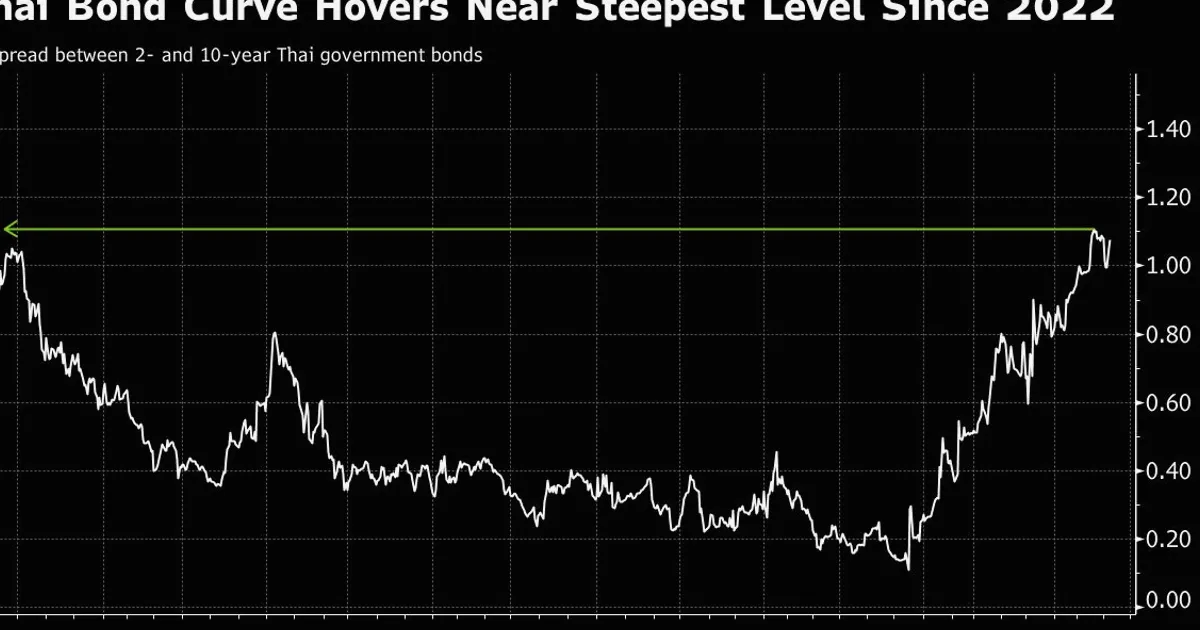
Thailand's yield curve has steepened to become the most pronounced in emerging Asia, prompting investors to increase allocations to long-dated Thai bonds. The shift reflects a divergence in interest-rate expectations between Thailand and its regional peers, with the Bank of Thailand expected to maintain a more accommodative stance relative to other central banks in the area. This steepening is measured by the widening spread between 2-year and 10-year government bond yields, which now exceeds that of other emerging Asian markets. The curve's shape is a key signal for fixed-income investors, as it encapsulates market views on future monetary policy, growth, and inflation.
For traders focused on interest rates and central bank policy, the steepening curve signals that the market is pricing in a sustained period of low short-term rates in Thailand while long-term yields adjust to reflect higher term premiums and inflation expectations. This dynamic makes Thai long bonds attractive for carry trades, especially as other emerging Asian markets face tightening cycles. The term premium—the extra yield investors demand for holding longer-dated bonds—has risen due to uncertainty about global inflation and fiscal policy, while short-term rates remain anchored by the Bank of Thailand's dovish stance. This contrasts with the Federal Reserve's dual mandate of price stability and maximum employment, which has led to a more aggressive tightening cycle in the US, causing yield curves there to invert. In emerging Asia, the divergence in central bank policies creates opportunities for relative value trades. Investors can check NowPrice's rates page for real-time pricing on Thai government bonds and regional yield comparisons.
Looking ahead, market participants will watch for the Bank of Thailand's next policy decision and any guidance on the pace of normalization. Key data releases, including inflation and GDP figures, will also influence whether the curve continues to steepen or begins to flatten. The divergence in regional monetary policy paths remains a central theme for emerging Asian fixed-income markets. Additionally, global factors such as US Treasury yield movements, driven by Fed balance-sheet runoff and swap spreads, could spill over into Thai bonds. The European Central Bank's transmission protection mechanism may also affect risk sentiment in emerging markets. A sustained steepening could attract further foreign inflows, but any shift in the Bank of Thailand's stance or a surprise inflation print could quickly flatten the curve.