




Alphabet Shares Drop After Second AI Star Departs for a Rival
Alphabet shares fell on Monday after another top AI researcher left for a competitor, raising concerns about talent retention and competitive positioning in the AI race.
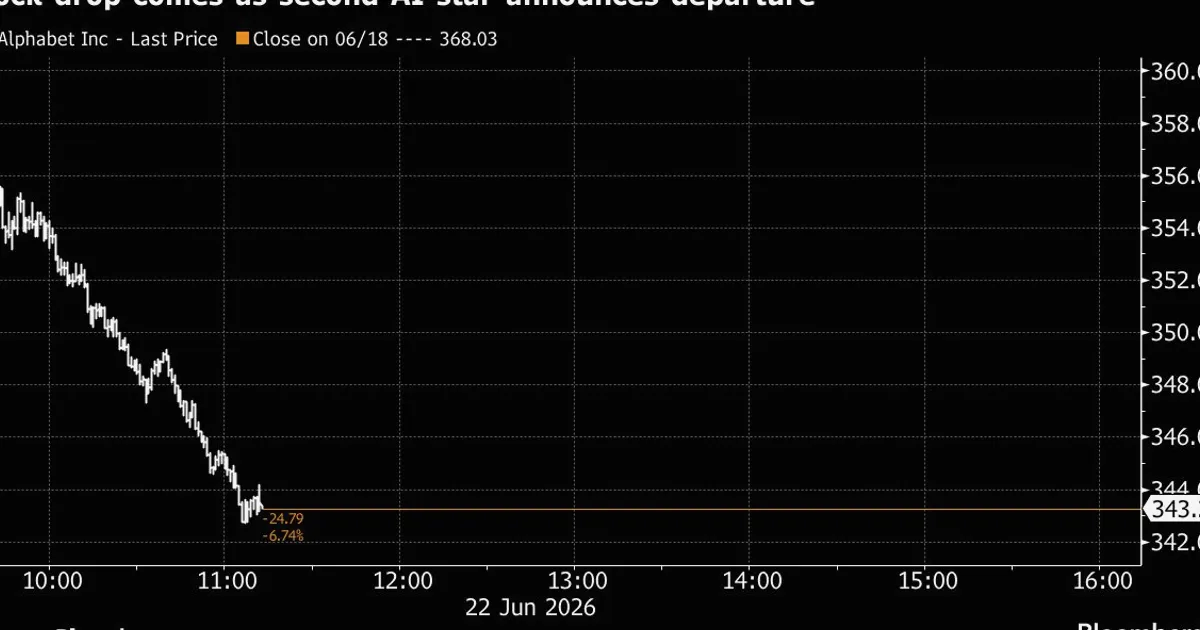
Alphabet shares declined on Monday following the departure of another high-profile artificial intelligence leader to a rival company. The stock move reflects growing investor unease about talent retention at the tech giant as competition for AI expertise intensifies. The sell-off pushed Alphabet's forward P/E below 22x, a discount to the sector median of 25x, yet still above the S&P 500's 20x. The earnings yield of roughly 4.5% now sits below the 10-year Treasury yield of 4.7%, a negative spread that the Fed model flags as a headwind for equities. Options-implied volatility on Alphabet rose 3 points to 28, signaling elevated hedging demand.
The departure marks the second time in recent months that a key AI researcher has left Alphabet for a competitor. While individual exits are common in the tech industry, the pattern raises questions about Alphabet's ability to maintain its edge in AI development. Investors are closely watching whether this signals a broader talent drain that could impact future product pipelines and innovation velocity. The company's buyback yield of 2.1% offers some support, but sector rotation has favored value over growth, with the tech-heavy Nasdaq 100 breadth indicators showing only 55% of stocks above their 50-day moving average. For equities traders tracking the sector, Alphabet's stock movement can be monitored on NowPrice's live stocks dashboard alongside peers like Microsoft and Meta.
Looking ahead, market participants will focus on Alphabet's upcoming earnings report for any commentary on talent retention strategies and AI investment plans. The broader tech sector may also see sentiment shifts if further departures occur. Key levels to watch include support near the stock's 50-day moving average and any analyst downgrades that could amplify selling pressure. A break below that level could open the door to the 200-day moving average around $155, while resistance sits at the 100-day moving average near $175. The CBOE Volatility Index (VIX) remains above 18, indicating persistent market anxiety that could exacerbate any negative headlines.