




Asian Stocks Set to Fall After Volatile US Session
Asian equities are poised to open lower following a turbulent Wall Street session, as investors assess the Iran conflict and await US inflation data due this week.
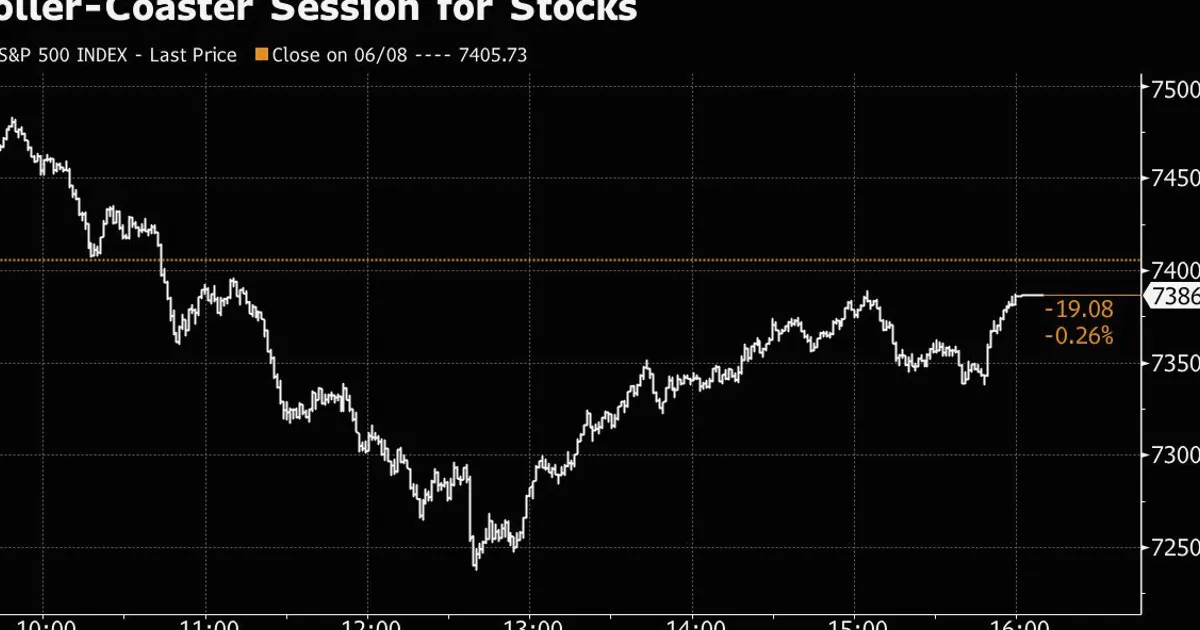
Asian stocks are set to decline at the open, tracking a volatile session on Wall Street where geopolitical tensions and inflation concerns weighed on investor sentiment.
Futures in Japan, Australia, and South Korea pointed lower after the S&P 500 swung between gains and losses before closing slightly down. The tech-heavy Nasdaq also struggled, as rising bond yields pressured growth stocks. The moves came as traders weighed the latest developments in the Iran conflict, which has kept energy prices elevated and added to uncertainty over global supply chains. Meanwhile, the market is bracing for the US consumer price index report due Thursday, which is expected to show inflation accelerated in May, potentially reinforcing the Federal Reserve's cautious stance on rate cuts. The Fed model, which compares the S&P 500 earnings yield (around 3.5%) to the 10-year Treasury yield (near 4.5%), suggests equities are relatively expensive, a factor that could amplify any negative reaction to hot CPI data. Traders can monitor these price movements on NowPrice's live stocks dashboard.
Looking ahead, the focus will be on the US CPI data and any further escalation in the Middle East. A hotter-than-expected inflation print could trigger a sell-off in risk assets, as it would push the forward P/E multiple lower from its current 20x level, while a surprise de-escalation in the Iran situation might provide a relief rally. Breadth indicators, such as the advance-decline line on the NYSE, have been weakening, signaling that market gains are narrowing. Sector rotation has favored energy and defensive stocks over technology, reflecting the shift in risk appetite. Additionally, buyback yields, which have been a key support for equities, may decline if borrowing costs remain elevated, further pressuring valuations. Options-implied volatility, as measured by the VIX, remains elevated above 20, indicating persistent hedging demand. In Asia, investors will also watch for policy signals from the People's Bank of China and any corporate earnings updates that could set the tone for regional markets.