




Bank Capital Markets Boom Gives Weakest Banks a Free Pass
Investors are increasingly indifferent to credit quality in junior bank capital markets, allowing weaker banks to issue debt on favorable terms despite underlying risks.
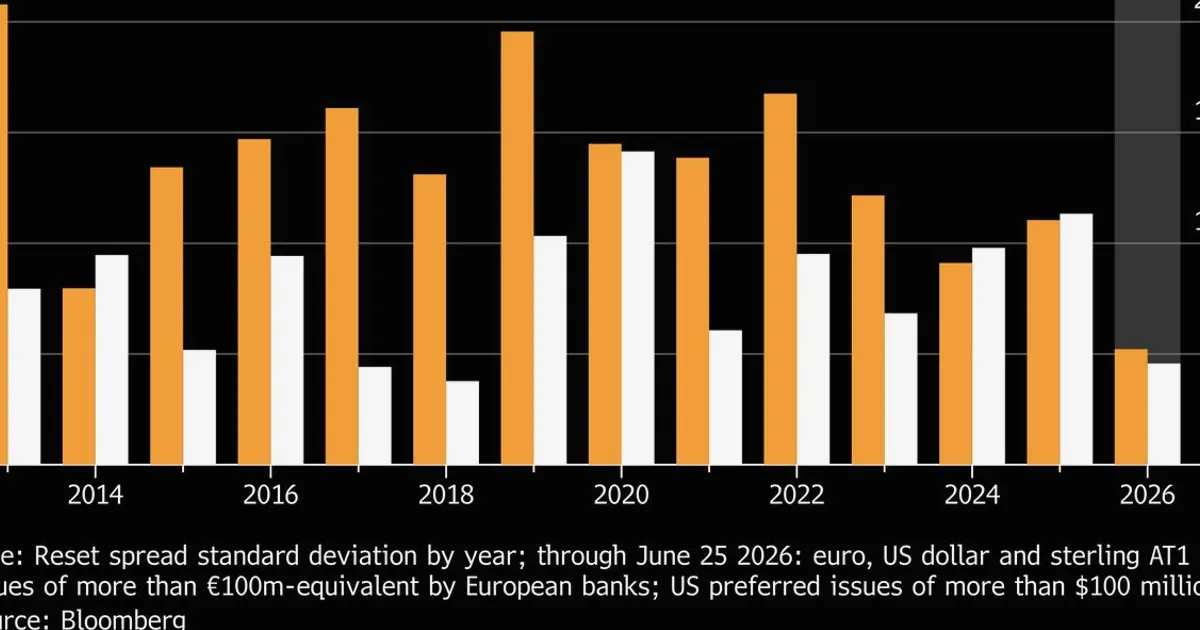
Investors are becoming remarkably indifferent to credit quality in the market for junior bank capital, where distinctions between strong and weak banks typically matter most. This trend is giving the weakest banks a free pass to issue debt on favorable terms, even as underlying risks remain elevated.
In the junior capital market—including instruments such as Additional Tier 1 (AT1) bonds and Tier 2 notes—spreads have compressed sharply, narrowing the gap between yields offered by highly-rated banks and those of lower-rated peers. This convergence suggests that investors are prioritizing yield over credit analysis, a behavior often seen in late-cycle market phases. For equity traders, this dynamic can signal complacency in the financial sector, potentially masking vulnerabilities that could emerge if economic conditions deteriorate. Live stock prices and charts on NowPrice show how bank equities are reacting to this shift in risk appetite.
The key risk is that weaker banks may be locking in higher leverage at a time when interest rate cuts are expected to compress net interest margins. If credit conditions tighten or a recession materializes, these institutions could face refinancing stress. Traders should monitor upcoming earnings reports from regional banks and watch for any widening in credit default swap (CDS) spreads, which would indicate a reassessment of risk. Regulatory developments around Basel III implementation also remain a wildcard for capital requirements.