




Chinese Stocks in Hong Kong Near Bear Market After Holiday
A gauge of Chinese stocks in Hong Kong is approaching bear market territory after the holiday break, pressured by weak consumption data that dampened investor sentiment.
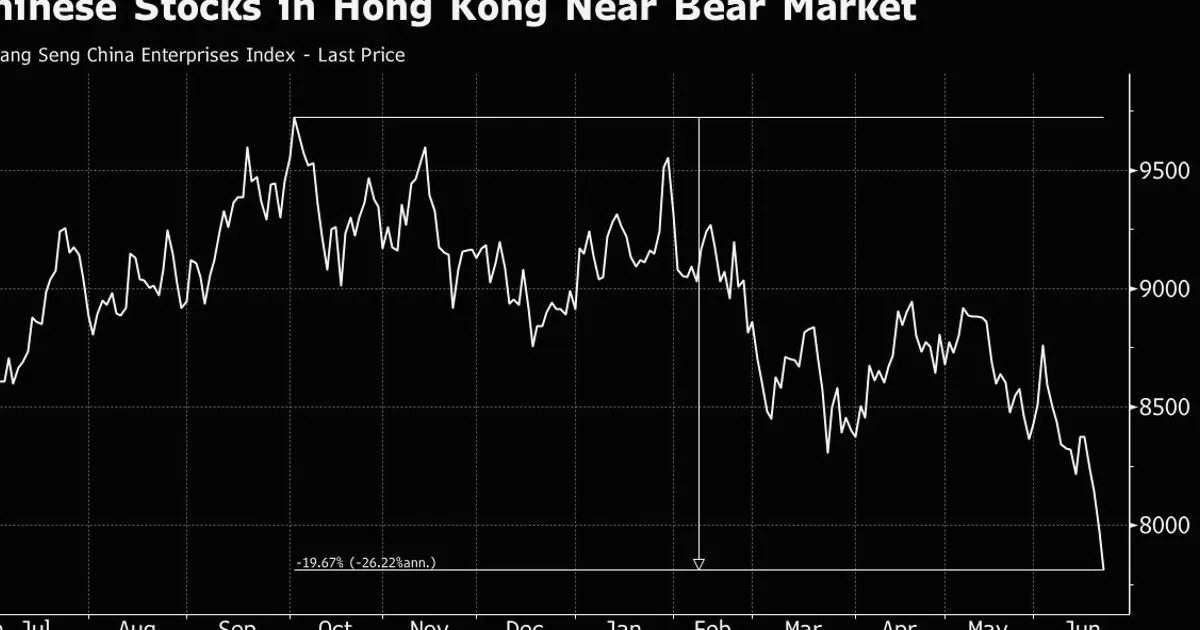
Chinese stocks listed in Hong Kong are edging toward a bear market as trading resumed after a holiday, weighed down by weak consumption data that underscored the fragility of the economic recovery.
The Hang Seng China Enterprises Index, which tracks Chinese companies listed in Hong Kong, has fallen more than 18% from its recent peak, approaching the 20% decline that defines a bear market. The sell-off accelerated after the release of disappointing retail sales and consumer confidence figures, which suggested that domestic demand remains sluggish despite policy support. The data reinforced concerns that China's post-pandemic rebound is losing momentum, particularly in the consumer sector, which had been expected to drive growth.
For equity traders, the slide in Chinese stocks reflects a broader risk-off sentiment in emerging markets, as investors reassess the outlook for corporate earnings amid a patchy recovery. The weakness in consumption also raises questions about the effectiveness of stimulus measures, including rate cuts and fiscal spending. On NowPrice, live stock prices and charts show how the market is reacting to each new data point, with the Hang Seng Index and related ETFs under close watch. The bear market signal could trigger further selling from momentum-driven funds and increase volatility in Hong Kong-listed Chinese stocks.
Looking ahead, traders will focus on upcoming economic data, including industrial production and fixed-asset investment figures, for signs of stabilization. Any additional policy announcements from Beijing, particularly targeted stimulus for consumption, could provide a catalyst for a rebound. Meanwhile, the trajectory of US interest rates and the yuan's exchange rate will remain key external factors influencing capital flows into Hong Kong equities.