




ETFs on Track for Record $1 Trillion Inflow Despite War, Inflation
Exchange-traded funds are on pace to attract a record $1 trillion in inflows this year, fueled by American households' buy-and-hold conviction despite persistent inflation, geopolitical tensions, and market volatility.
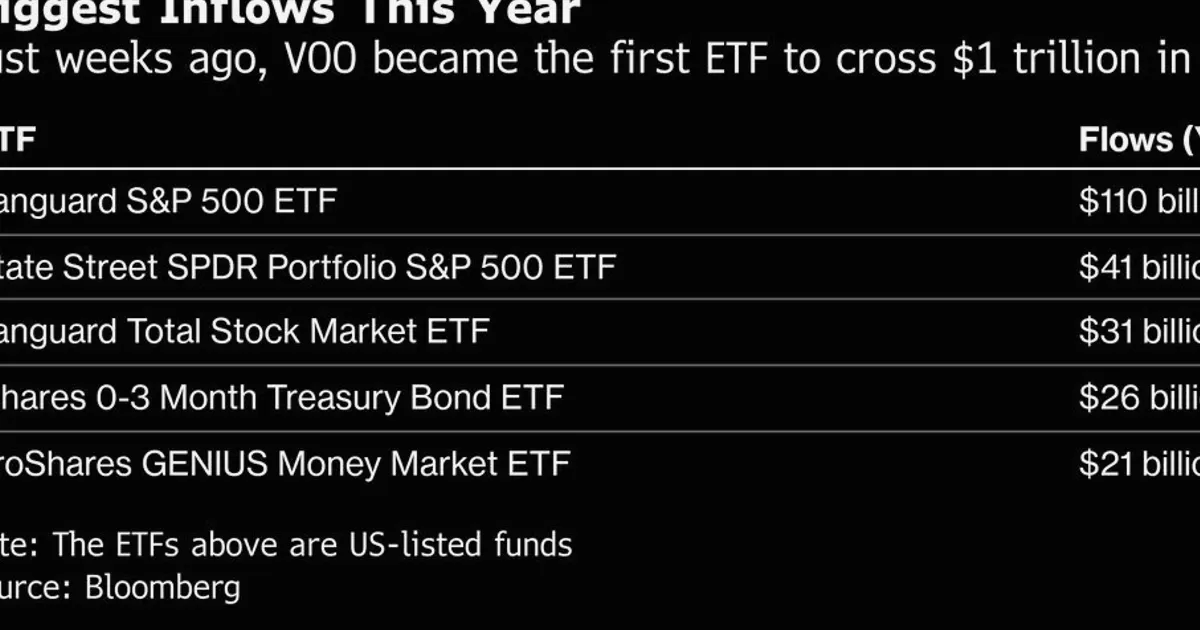
Exchange-traded funds are attracting cash at a record-breaking trillion-dollar pace despite persistent inflation, war in the Middle East and bouts of market volatility, a testament to American households’ enduring buy-and-hold conviction.
ETFs have pulled in over $800 billion through mid-2026, putting the industry on track to exceed $1 trillion in net inflows for the first time in a single calendar year. The previous record of $900 billion was set in 2024. The surge spans equity, fixed-income, and commodity ETFs, with broad-based U.S. equity funds capturing the largest share. Investors have continued to add to positions during pullbacks, a pattern that has reinforced the market's resilience.
For stock market participants, the relentless ETF inflows signal a structural shift in how retail and institutional capital is deployed. The shift from active mutual funds to passive ETFs has been underway for years, but the acceleration in 2026 suggests that buy-the-dip behavior has become deeply embedded. This steady demand provides a cushion against selloffs, though it also raises questions about market concentration and valuation extremes. NowPrice's real-time stock quotes allow traders to monitor how these flows are impacting individual equities and sectors.
Looking ahead, the key question is whether this inflow momentum can be sustained if inflation remains sticky or if geopolitical risks escalate. The Federal Reserve's next policy decision and corporate earnings reports in the coming months will be critical tests. If the U.S. economy avoids a hard landing, ETF inflows could easily surpass $1.2 trillion for the year. However, a sharp downturn in risk appetite could temporarily reverse the trend, as seen during brief episodes of market stress in 2025.