




Iran Leverages Hormuz in Nuclear Talks, Analyst Says
Iran successfully leveraged the Strait of Hormuz in negotiations with the US, according to RANE analyst Ryan Bohl, as a new deal to end the conflict was signed.
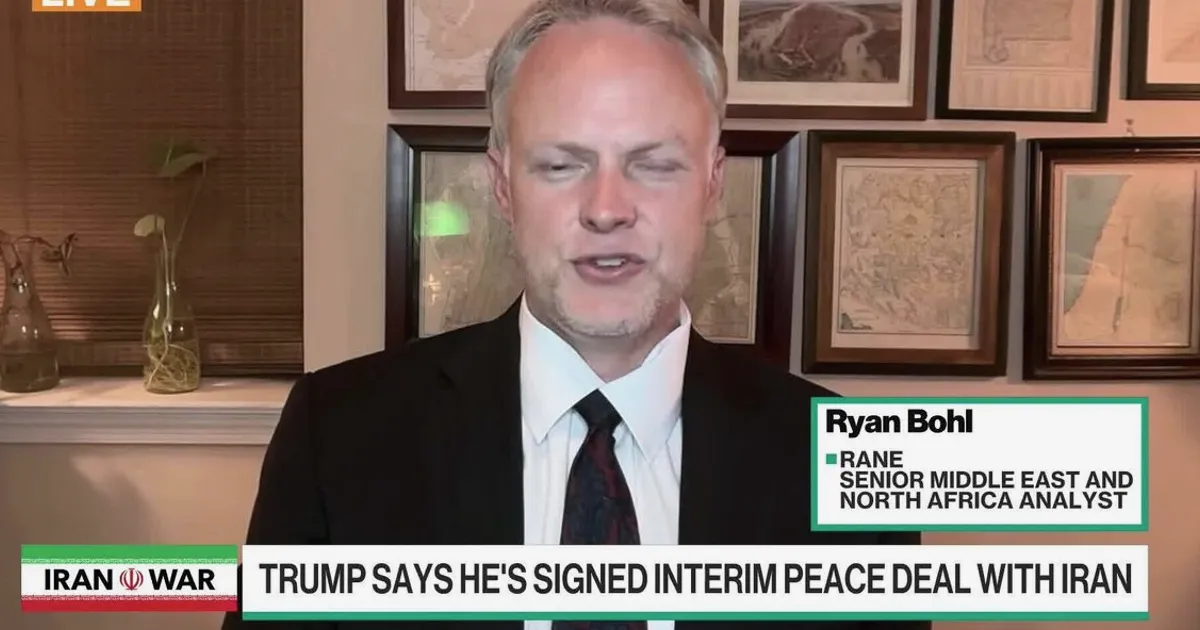
President Trump signed a memorandum of understanding to end the war in Iran and reopen the Strait of Hormuz after more than 100 days of conflict, according to a Bloomberg report. Ryan Bohl, Senior Middle East and North Africa Analyst at RANE, noted that Iran successfully leveraged the strategic waterway in negotiations, contrasting the new deal with the JCPOA under the Obama administration. The agreement marks a significant shift in US-Iran relations, potentially reshaping geopolitical risk premiums embedded in global asset prices.
The reopening of the Strait of Hormuz removes a major geopolitical risk that had disrupted global oil shipments and heightened volatility in energy markets. For equity traders, this development reduces uncertainty in the energy sector and could ease supply concerns, potentially weighing on oil prices and benefiting sectors sensitive to fuel costs, such as airlines and transportation. From a valuation perspective, the earnings yield on the S&P 500 currently stands at around 3.8%, compared to the 10-year Treasury yield near 4.5%, making stocks relatively less attractive under the Fed model. However, a reduction in geopolitical risk could narrow this gap by boosting forward earnings expectations. The forward P/E for the S&P 500 is approximately 20x, above its 5-year average of 19x, suggesting that further upside may depend on earnings growth rather than multiple expansion. Sector rotation could favor cyclicals like industrials and materials if the deal supports global trade, while energy stocks may face headwinds from lower oil prices. Buyback yields remain elevated at around 3% for the S&P 500, providing a floor for equities. Options-implied volatility, as measured by the VIX, has declined to around 15, reflecting reduced fear. NowPrice's real-time stock quotes allow traders to monitor how energy and transport stocks react to this shift in risk sentiment.
Market participants will watch for further details on the agreement's implementation and its impact on regional stability. The deal's durability and any subsequent adjustments to US sanctions policy will be key factors influencing investor confidence in Middle East-exposed equities and broader market risk appetite. Breadth indicators, such as the advance-decline line, will be monitored to confirm whether the rally is broad-based. Additionally, the reaction of oil prices and the US dollar will provide clues on capital flows. If the agreement holds, it could lead to a sustained rotation out of defensive sectors into value and cyclical names, supported by improving global growth prospects.