




Morgan Stanley, Goldman Shares Drop on OpenAI IPO Delay
Shares of Morgan Stanley and Goldman Sachs fell on Friday after reports that OpenAI may delay its IPO until next year, citing tech stock volatility.
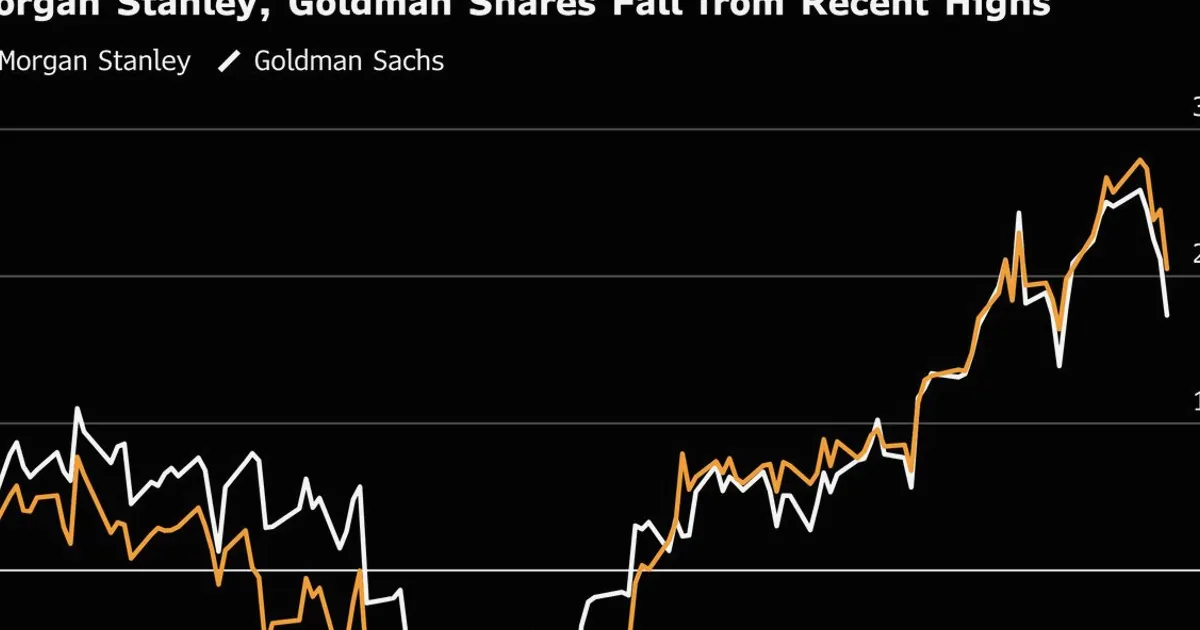
Shares of Morgan Stanley and Goldman Sachs fell on Friday after reports that OpenAI is considering delaying its initial public offering until next year, citing volatility in technology stocks. The news weighed on bank stocks, as both firms are among the top underwriters for the highly anticipated IPO. Morgan Stanley (MS) closed down 2.3%, while Goldman Sachs (GS) fell 1.8%, underperforming the broader financial sector. The potential delay comes amid a broader selloff in tech stocks, with the Nasdaq Composite entering correction territory this week, down more than 10% from its recent high. For investment banks like Morgan Stanley and Goldman Sachs, a postponed IPO means delayed fee income and could signal weaker demand for new listings. Underwriting fees are a key revenue driver for these banks, and a delay shifts expected income from the current quarter into future periods. Traders are watching how this affects the banks' near-term earnings outlook, as the Fed model—comparing earnings yield to the 10-year Treasury yield—shows equities are less attractive relative to bonds, which may further dampen IPO appetite. Live stock prices and charts on NowPrice show the market's reaction in real time.
Looking ahead, investors will focus on any official confirmation from OpenAI regarding its IPO timeline. The broader market will also monitor tech sector volatility and upcoming economic data, including the Fed's preferred inflation gauge, the core PCE price index, which could influence risk appetite and IPO activity. A prolonged delay could shift underwriting revenue expectations for the third quarter, potentially lowering consensus estimates for investment banking fees. Additionally, sector rotation out of growth and into value has accelerated, with the S&P 500 forward P/E compressing from 21x to 19x over the past month, reflecting heightened uncertainty. Buyback yields, which have supported equities, may also wane if volatility persists, while options-implied volatility on the QQQ ETF has spiked, indicating traders expect further swings. The CBOE Volatility Index (VIX) has risen above 25, suggesting elevated fear. For now, the IPO pipeline remains a key barometer of market confidence, and any delay from a high-profile name like OpenAI could have ripple effects across the underwriting landscape.