




Options Flash Bearish Yen Signal as Tokyo Stays on the Sidelines
Options market signals bearish yen sentiment as interest-rate differentials favor the dollar and Japanese authorities refrain from intervention, putting pressure on the currency.
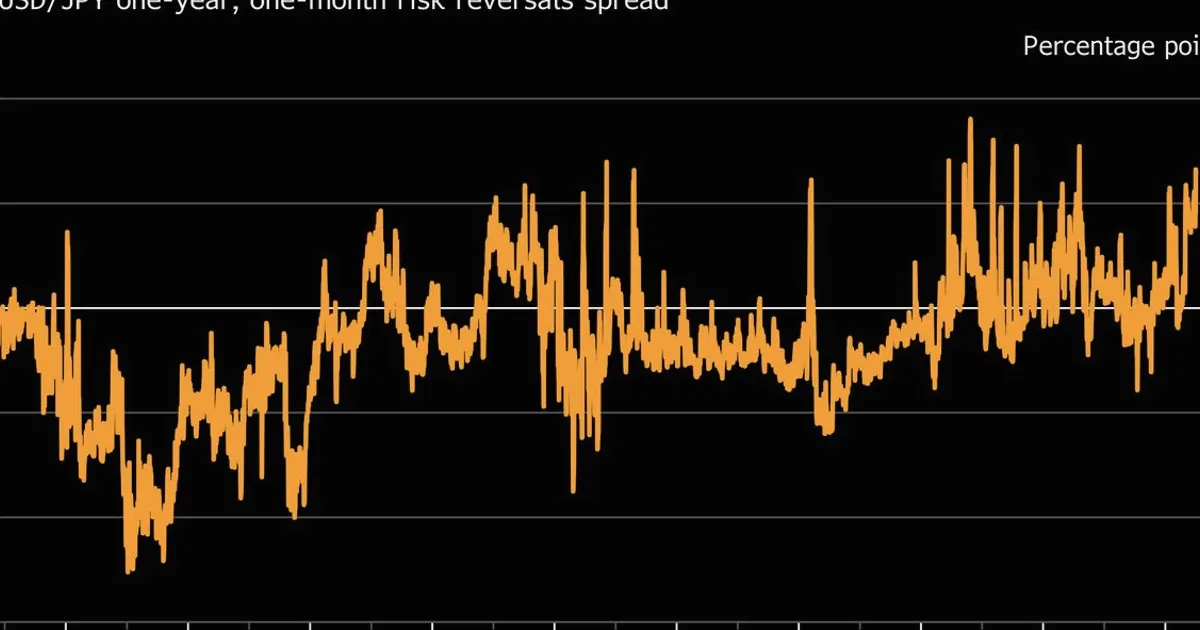
The options market is flashing a bearish signal on the yen, with interest-rate differentials remaining firmly in favor of the dollar and Japanese authorities avoiding intervention for now. Traders are seeing increased demand for put options on the yen, reflecting expectations of further depreciation. The wide rate gap between the US and Japan continues to drive carry trades, with the dollar-yen pair hovering near multi-year highs. The Bank of Japan has maintained its ultra-loose monetary policy, while the Federal Reserve keeps rates elevated, reinforcing the dollar's advantage. For equity investors, a weaker yen typically benefits Japanese exporters like Toyota and Sony, but it also raises import costs and pressures domestic consumption. Traders can track these currency moves and their impact on stocks using NowPrice's live dashboard.
This yen weakness ties into broader equity market dynamics through the lens of the Fed model, which compares earnings yields on stocks to Treasury yields. With the S&P 500 forward P/E around 20x, the earnings yield sits near 5%, while the 10-year Treasury yield is above 4.5%, making the equity risk premium relatively thin. A weaker yen boosts export-driven earnings for Japanese firms, potentially lifting their forward P/Es, but the overall market breadth remains narrow, with gains concentrated in a few mega-cap tech names. Sector rotation has been muted, as higher rates favor value and energy over growth, while buyback yields have moderated from record highs due to higher borrowing costs. Options-implied volatility on the yen, as measured by the JPY/USD 1-month at-the-money implied vol, has ticked up, reflecting hedging demand ahead of key data releases.
Looking ahead, market participants will focus on any verbal intervention from Japanese officials or actual BOJ policy shifts. Key data points include US inflation prints and Fed speeches, which could further widen or narrow the rate differential. The options market's positioning suggests that a break above key resistance levels could accelerate yen selling, while any surprise hawkish BOJ move would trigger a sharp reversal. A sustained yen decline could also pressure US multinationals with Japan exposure, while boosting Japanese equities' relative performance. Traders should monitor the 150 level on USD/JPY as a psychological barrier; a break above could trigger stop-losses and amplify volatility across currencies and equities alike.