




PBOC Rate Regime Shift Seen Boosting Bond Market Liquidity
Analysts expect the PBOC's refined monetary policy toolkit to reduce money-market volatility and support bond prices, signaling a more accommodative stance for Chinese equities.
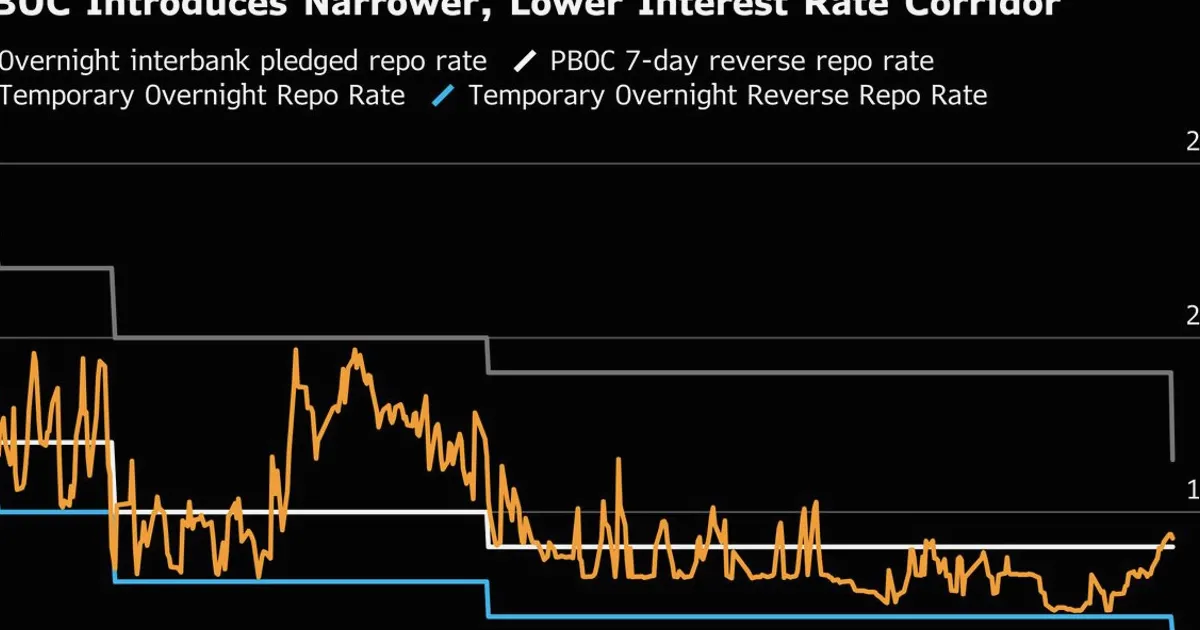
The People's Bank of China's latest refinement of its monetary policy toolkit is expected to dampen money-market volatility and support bonds, according to analysts. The move marks a shift in the central bank's rate-setting framework, aimed at improving the transmission of policy signals to financial markets.
The PBOC's new rate regime introduces a clearer corridor for short-term interest rates, which should reduce uncertainty in interbank lending. For equity traders, lower volatility in money markets typically translates into a more stable funding environment for leveraged positions and margin trading. Additionally, the expectation of steadier bond prices may encourage foreign inflows into China's fixed-income market, which has historically been sensitive to liquidity swings. NowPrice's real-time stock quotes show that Chinese equities have responded positively to the news, with the Shanghai Composite edging higher in early trading.
Looking ahead, traders will watch for the PBOC's next medium-term lending facility (MLF) rate decision, which will provide further clues on the central bank's easing bias. The impact on the yuan's exchange rate will also be closely monitored, as a more accommodative policy could weigh on the currency. Any follow-up measures, such as reserve requirement ratio (RRR) cuts, would be seen as additional support for both bonds and equities.