




South Korea Won Nears 2009 Low as Foreigners Dump Stocks
South Korea's won is sliding toward its weakest level since 2009 as global funds sell local stocks amid a stronger dollar and risk-off sentiment.
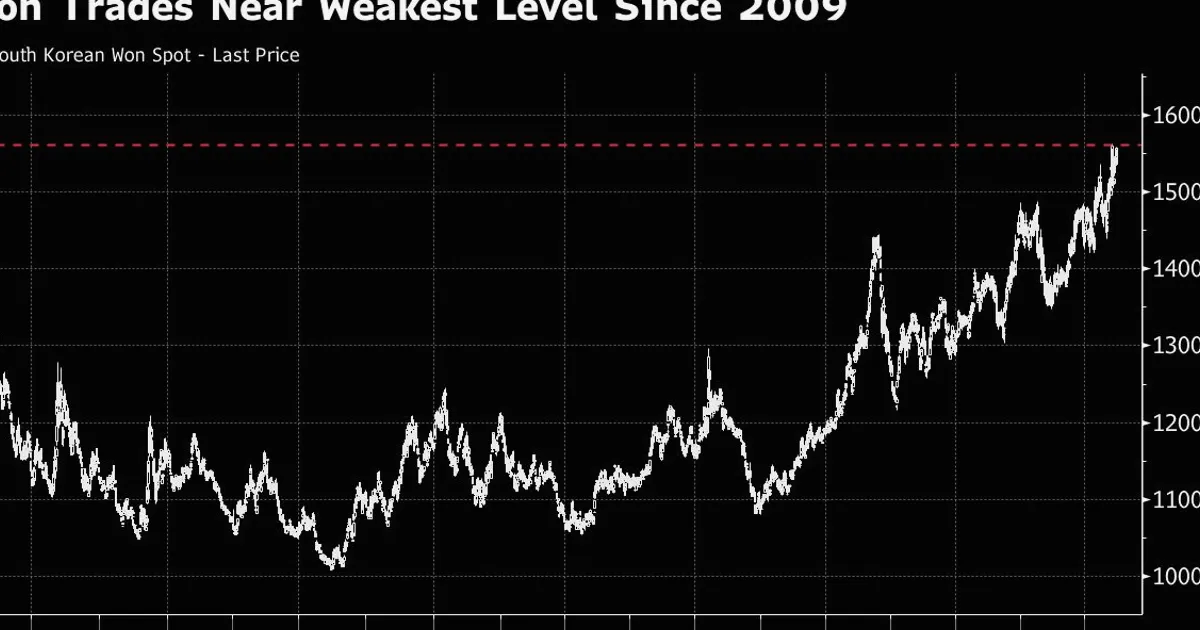
South Korea's won is sliding toward its weakest level since the 2008-2009 global financial crisis, driven by a stronger dollar and sustained selling of local equities by foreign investors.
The won has been under pressure as global funds reduce exposure to emerging markets, with South Korea's export-dependent economy particularly sensitive to shifts in risk sentiment. The currency's decline reflects a broader trend of capital outflows from Asian markets, as the Federal Reserve's hawkish stance keeps the dollar elevated. On NowPrice, live charts show the won's depreciation against the dollar, alongside the performance of the KOSPI index, which has also been impacted by foreign selling. The won-dollar exchange rate is a key indicator for traders monitoring the health of South Korea's financial markets.
The weakening won could benefit South Korean exporters by making their goods cheaper abroad, but it also raises import costs and fuels inflation. Traders should watch for potential intervention by the Bank of Korea or the finance ministry, as authorities have historically stepped in to curb excessive volatility. Key levels to monitor include the 1,400 won per dollar mark, a psychological threshold that could trigger further selling if breached. Additionally, the upcoming US jobs data and Fed minutes will provide further clues on the dollar's trajectory, which will likely dictate the won's near-term direction.