




South Korean Banks Expand Trading Floors for 24-Hour Won Market
South Korea's largest banks are expanding trading desks in London and Seoul to prepare for the won's round-the-clock trading starting next week, a move that could boost liquidity and attract foreign investment.
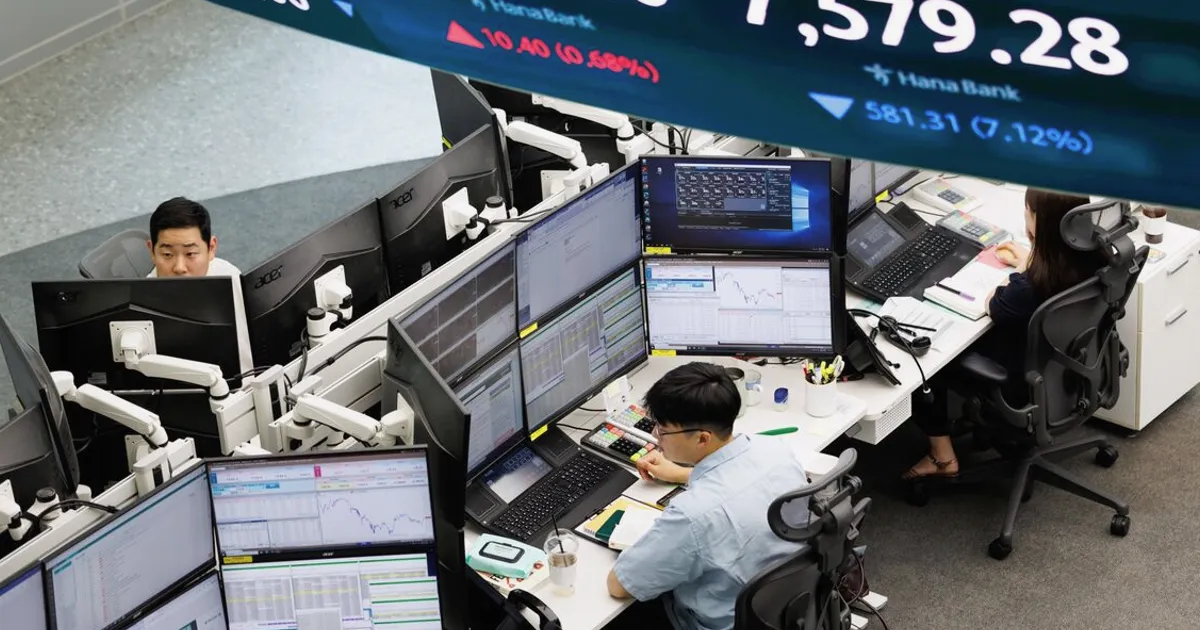
South Korea's largest banks are expanding their trading desks in London and Seoul to prepare for the won's transition to round-the-clock trading starting next week. This initiative, a key step in the internationalization of the South Korean currency, breaks from the tradition of limiting won trading to Asian hours. The expansion is expected to boost liquidity in the won market, potentially narrowing bid-ask spreads and reducing transaction costs for participants. For equity traders, a more liquid currency market lowers the hedging costs associated with foreign portfolio investments in Korean stocks, enhancing the appeal of the KOSPI index. NowPrice's live stock prices and charts show how the market is reacting, with Korean financial stocks like KB Financial Group (KB) and Shinhan Financial Group (SHG) seeing increased interest. The move aligns with the broader trend of global forex integration, where extended hours can improve price discovery and attract a wider investor base.
This development matters because it addresses a long-standing inefficiency in the won market. Previously, offshore trading in the won was limited, leading to higher costs and less transparency. By enabling 24-hour trading, South Korea aims to deepen its financial markets and reduce reliance on the onshore fixing rate. For investors using the Fed model, which compares earnings yields to Treasury yields, a more accessible won market could lower the risk premium on Korean equities, potentially narrowing the gap between the KOSPI's earnings yield (currently around 4.5%) and the 10-year U.S. Treasury yield (near 4.2%). Additionally, improved liquidity may reduce volatility in the won-dollar exchange rate, benefiting options traders who rely on implied volatility for pricing. The success of this initiative could serve as a template for other Asian currencies, such as the Chinese yuan or Indian rupee, to adopt similar 24-hour trading models, further integrating global forex markets and enhancing cross-border capital flows.
Traders should watch for initial volume and volatility in the extended trading hours, particularly during the London and New York overlaps. Key metrics include the won-dollar exchange rate, which may test support or resistance levels, and the impact on Korean ADRs listed in the U.S. A successful launch could boost buyback yields for Korean firms, as lower hedging costs free up capital for share repurchases. Conversely, if volatility spikes, it may signal lingering structural issues. Sector rotation toward financials and export-oriented industries could accelerate, as these benefit most from a more liquid currency. Options-implied volatility on USD/KRW should be monitored for signs of market stress. Ultimately, the initiative's success will depend on sustained participation from global investors and the ability of Korean banks to manage the operational challenges of 24-hour trading.