




Tech Volatility Hits Highest Since Dot-Com Bust Next to S&P 500
Tech stock volatility has surged to levels not seen since the dot-com bust, signaling extreme uncertainty in high-growth names even as the S&P 500 remains near records.
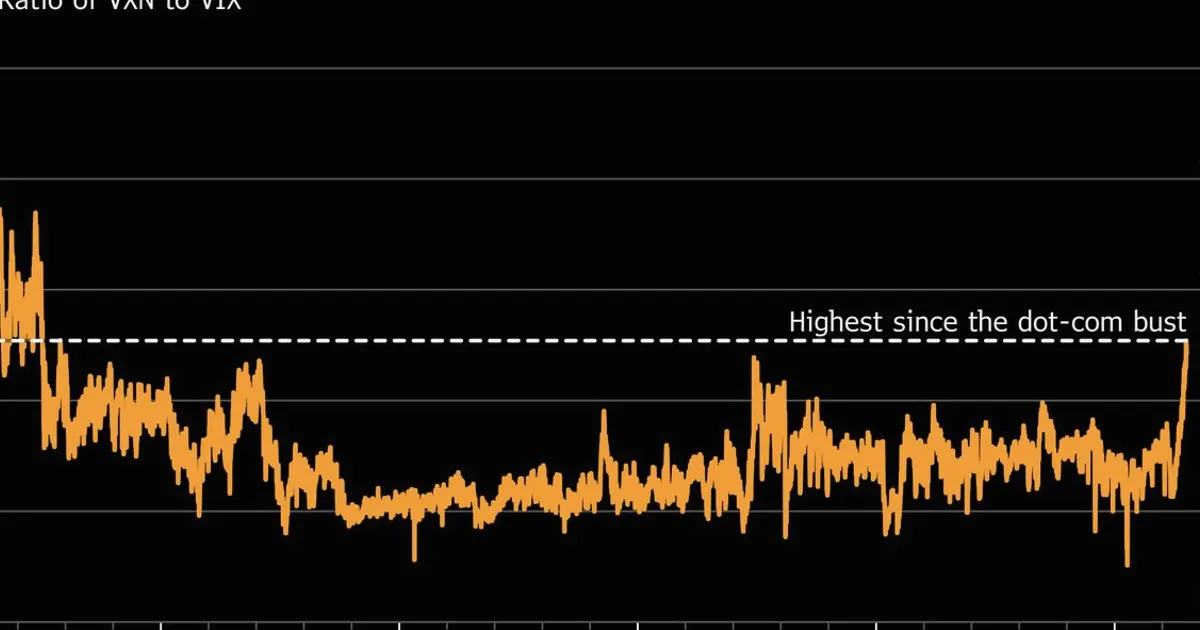
Tech stock volatility has climbed to its highest level since the dot-com bust, a stark contrast to the relative calm in the broader S&P 500. The CBOE Volatility Index for tech stocks, often tracked via the VXN, has surged, reflecting heightened anxiety among investors in high-growth names. This divergence between tech and the broader market underscores a growing unease about valuations and the sustainability of the rally in mega-cap technology shares.
The spike in tech volatility comes as the S&P 500 continues to hover near all-time highs, driven by a narrow group of large-cap stocks. The gap between the VXN and the VIX, which measures overall market volatility, has widened significantly. This suggests that while the broader market appears stable, tech investors are bracing for sharp swings. Historically, such divergences have preceded broader market corrections, as the tech sector's influence on indices like the S&P 500 has grown. For equities traders, this environment calls for careful risk management, as options-implied volatility in tech names suggests potential for outsized moves. Live stock prices and charts on NowPrice show how the market is reacting in real time.
Looking ahead, traders should monitor upcoming earnings reports from major tech companies, as any disappointments could trigger further volatility. Additionally, the Federal Reserve's policy stance remains a key driver; any hawkish surprises could pressure high-valuation stocks. The tech-heavy Nasdaq 100's relative strength index (RSI) is also worth watching for signs of overextension. If volatility persists, it may signal a rotation out of growth and into value or defensive sectors. Investors should stay alert to sector rotation patterns and breadth indicators for clues on the market's next move.