




US Service Sector Growth Slows Slightly in June, ISM Index at 54
The ISM services index fell 0.5 point to 54 in June, signaling continued expansion but at a slower pace, which may ease pressure on the Federal Reserve to hike rates further.
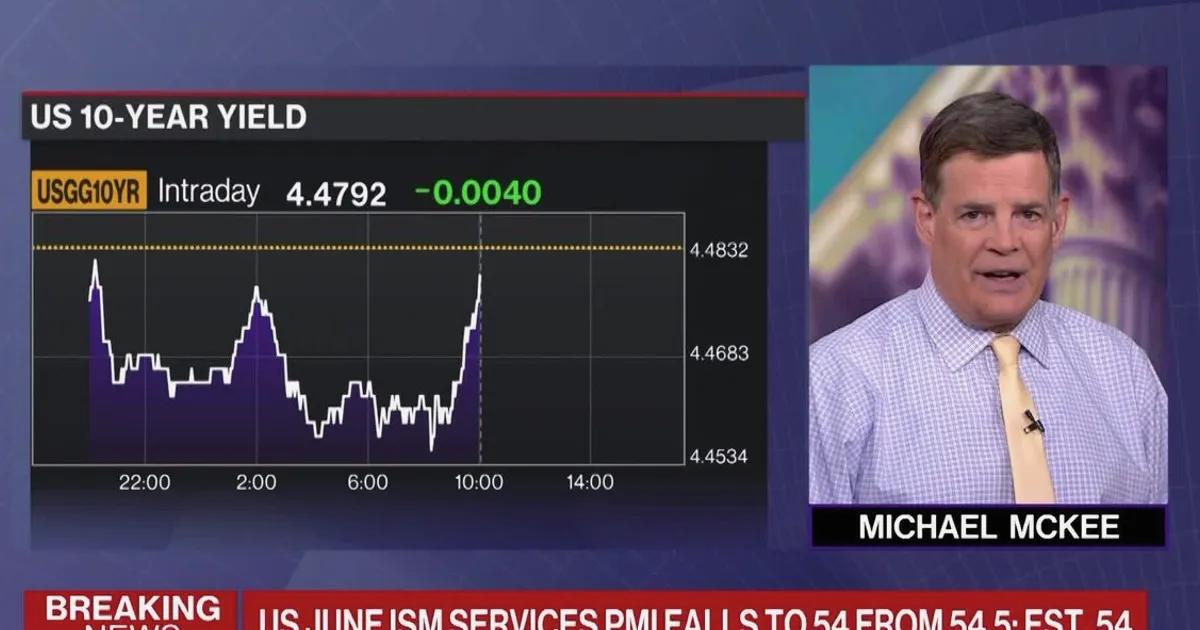
The US service sector expanded in June at a slightly slower pace, with the Institute for Supply Management’s services index decreasing 0.5 point to 54. The reading remains above the 50 threshold that separates expansion from contraction, indicating the sector is still growing, albeit at a more moderate rate. This marks the 42nd consecutive month of expansion, though the pace has eased from the post-pandemic highs seen in 2021-2022.
The slowdown in service sector growth may ease concerns about overheating in the economy, potentially reducing the urgency for the Federal Reserve to continue its aggressive rate-hiking cycle. For equity traders, a less hawkish Fed outlook could support risk appetite, as lower interest rate expectations tend to boost valuations, particularly for growth stocks. The so-called Fed model, which compares the earnings yield of the S&P 500 (currently around 5.2%) to the 10-year Treasury yield (near 4.3%), still shows a slight equity premium, but a narrowing gap could pressure valuations if yields rise again. Forward P/E multiples for the S&P 500 have compressed to about 20x from over 23x in early 2022, reflecting higher rates and mixed earnings. However, the data also suggests that the economy is cooling, which could weigh on corporate earnings expectations. Sector rotation has favored defensive areas like healthcare and utilities over cyclicals, while buyback yields remain elevated near 3% for the S&P 500, providing some support. Options-implied volatility, as measured by the VIX, has stayed below 15, indicating relatively calm markets. Traders can monitor current pricing on NowPrice's stocks page for real-time market reactions.
Looking ahead, investors will focus on upcoming inflation data and the Fed's next policy meeting for clues on the rate path. A sustained slowdown in services activity could reinforce expectations of a pause or even a cut later this year, while a rebound would keep the tightening bias alive. Key levels to watch include the ISM index's trajectory over the next few months and any divergence from manufacturing data, which has been contracting for several months. Breadth indicators, such as the percentage of S&P 500 stocks above their 200-day moving average, have weakened recently, suggesting that the rally is narrowing. If services data continues to soften, it may increase the probability of a Fed pivot, but sticky inflation could delay such a move. The ISM services prices paid index, which fell to 56.3 from 58.1, offers some relief on the inflation front, but the labor market remains tight with the employment subindex at 53.1.