




World Cup to Drive Billions in Betting Volume, Analysts Say
The 2026 World Cup is expected to generate billions in sports betting volume, benefiting US gaming stocks as prediction markets gain popularity.
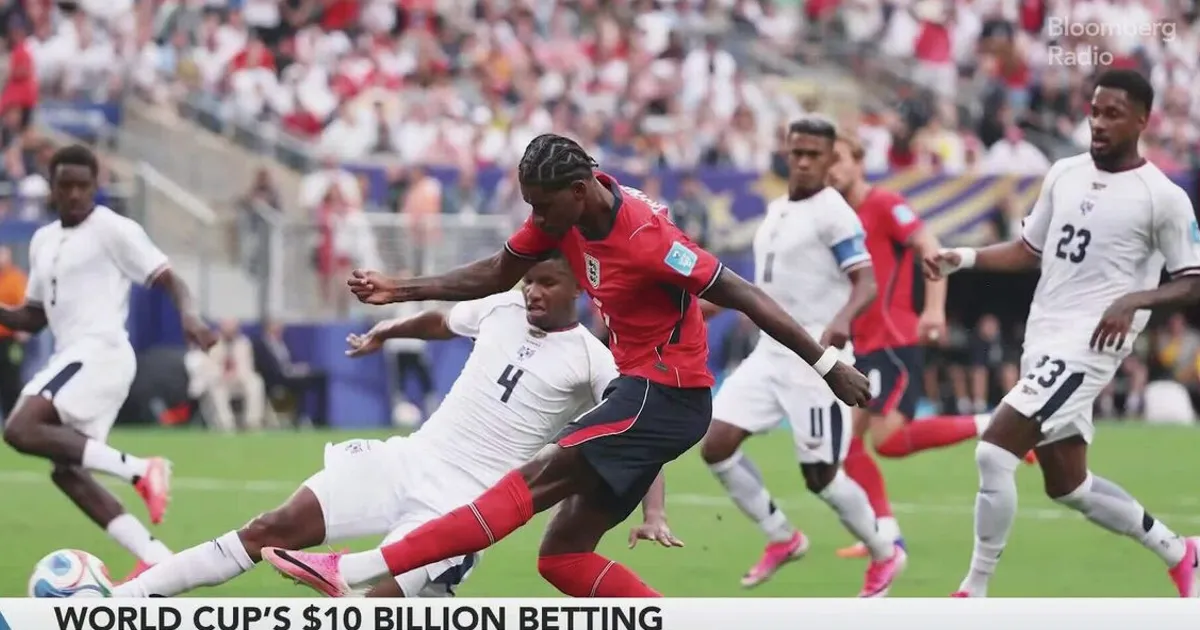
The 2026 World Cup is expected to drive billions of dollars in sports betting volume, according to analysts at Macquarie, marking the first tournament since prediction markets like Kalshi and Polymarket surged in popularity. The event is seen as a major catalyst for US gaming stocks, as bettors flock to both traditional sportsbooks and newer platforms. This surge in betting activity is reminiscent of the Super Bowl effect, where single-event handle can exceed $1 billion, but the World Cup's month-long duration and global audience could amplify volumes significantly. Macquarie's analysis draws parallels to the 2022 World Cup, which generated over $1.5 billion in legal US sports bets, and the 2026 edition is expected to surpass that given expanded legalization and the rise of prediction markets.
The World Cup, which kicks off this week, represents a milestone for the sports betting industry. Chad Beynon, Senior Gaming Analyst at Macquarie, noted that the combination of high-profile matches and the rise of prediction markets could significantly boost engagement. Stocks of companies with exposure to sports betting, such as DraftKings (DKNG) and FanDuel parent Flutter Entertainment (FLUT), are expected to benefit. Live prices and charts on NowPrice show how the market is reacting to these expectations. From a valuation perspective, DraftKings trades at a forward P/E of around 35x, while Flutter's forward P/E is approximately 28x, reflecting high growth expectations. The Fed model, which compares earnings yield to the 10-year Treasury yield (currently ~4.5%), suggests that these stocks may be pricing in aggressive growth, as their earnings yields are below the risk-free rate. However, sector rotation into consumer discretionary and gaming names could provide support, especially if breadth indicators like the advance-decline line for gaming stocks show improving participation.
Investors will watch for weekly handle reports and any regulatory developments that could affect the sector. The tournament's outcome and the performance of prediction markets may also influence long-term trends in sports wagering. Analysts advise monitoring consumer spending patterns and state-level legalization efforts as key indicators for the industry's growth trajectory. Additionally, buyback yields for companies like DraftKings remain low (under 1%), as they prioritize reinvestment over shareholder returns, while options-implied volatility for DKNG and FLUT has risen ahead of the World Cup, suggesting traders expect larger price swings. Key catalysts include handle reports during the group stage and knockout rounds, as well as any news on state legalization in Texas or California, which could unlock significant new markets. The performance of prediction markets like Kalshi and Polymarket will also be scrutinized, as their ability to attract retail and institutional flows could reshape the competitive landscape.