




Leviathan Metals starts diamond drilling at Kalahari Copper Belt project
Leviathan Metals has commenced a 10,000-meter diamond drilling program at its Central Project in Botswana's Kalahari Copper Belt, targeting copper mineralization similar to MMG's adjacent Khoemacau mine.
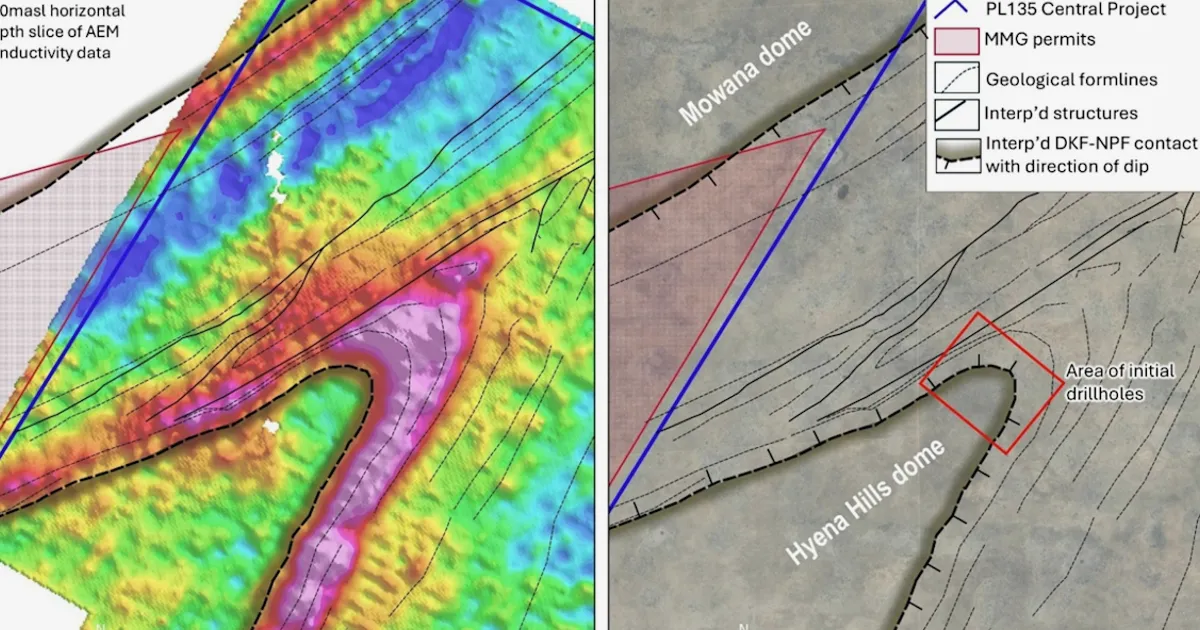
Leviathan Metals Corp. has announced the start of a diamond core drilling program of up to 10,000 meters at its Central Project, located in the Kalahari Copper Belt of Botswana. The drilling is designed to test copper mineralization targets identified through recent airborne electromagnetic surveys, which revealed over 20 kilometers of prospective contact beneath sand cover. Diamond drilling is a key exploration technique that retrieves intact cylindrical rock samples, allowing geologists to directly observe mineral content and structure at depth, providing more reliable data than other methods like reverse circulation drilling.
The program aims to intersect the DKF-NPF contact, a geological structure analogous to that hosting MMG Limited's adjacent Khoemacau copper mine. Success could significantly enhance the project's value, as Khoemacau is a major producing asset in the region. For commodities traders, developments in copper exploration are closely watched given copper's critical role in electrification and renewable energy infrastructure, where it is used extensively in wiring, motors, and transformers. Current copper prices and supply-demand dynamics can be tracked on NowPrice's commodities page, as global copper demand is expected to rise with the transition to electric vehicles and solar power.
Investors will monitor drill results over the coming weeks, with initial shallow holes designed to locate the contact before deeper testing at prioritized targets. Positive results could trigger further exploration and potentially de-risk the project, while negative outcomes may weigh on the stock. The company is fully funded for the program, reducing near-term dilution risk. Key catalysts include assay results from the first batch of holes, which could provide early indications of grade and thickness, and any updates on regional exploration by peers that may validate the geological model.