




Euro Bears Return as Surging Oil Prices Test Currency Rebound
Traders are buying insurance against renewed euro weakness as surging crude oil prices threaten last week's rebound, highlighting the currency's sensitivity to energy costs.
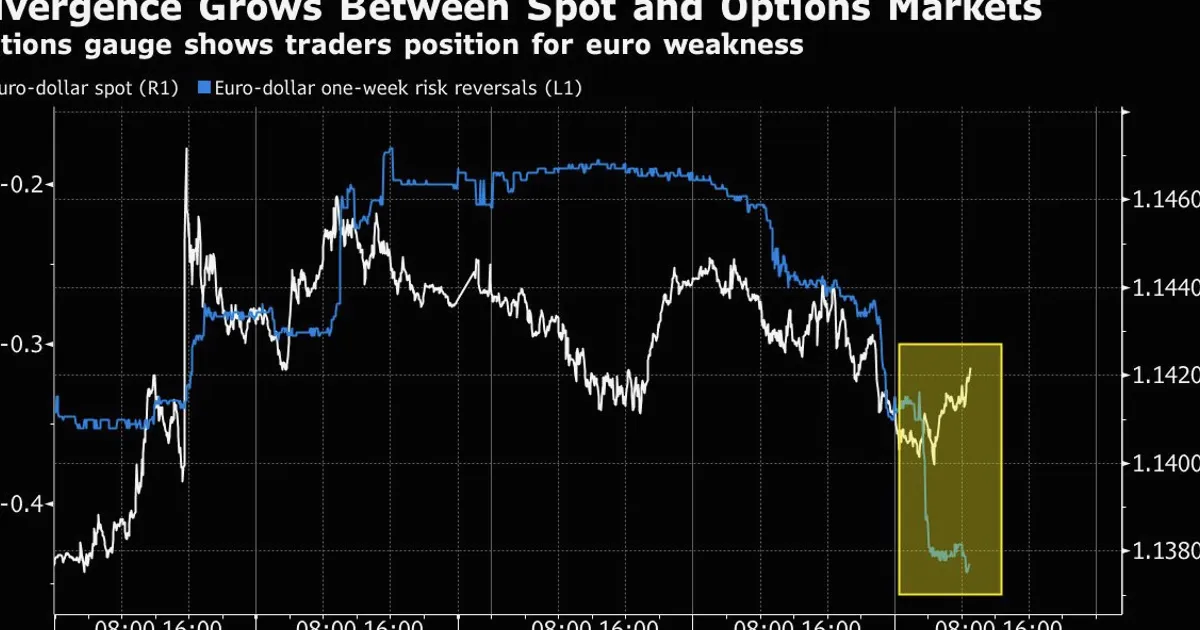
Traders are piling into hedges against a weaker euro as surging crude oil prices threaten to reverse the currency's recent rebound. The euro, which had rallied last week on improved risk sentiment, now faces renewed selling pressure as energy costs climb. The correlation is rooted in the eurozone's heavy reliance on imported energy: higher crude prices widen the region's trade deficit, weaken terms of trade, and fuel inflation expectations, complicating the European Central Bank's policy path. For fuel traders, this cross-asset signal is critical—a falling euro often amplifies dollar-denominated commodity gains, creating a feedback loop. The Brent-WTI spread has widened as US crude production remains robust, while European refineries face higher input costs, squeezing crack spreads. Meanwhile, OPEC+ spare capacity remains a key variable; Saudi Arabia and Russia have signaled continued coordination to manage supply, but any unexpected output increase could cap oil's upside. Traders can track these real-time moves on NowPrice's live fuel dashboard to gauge market sentiment.
The euro's vulnerability to oil price spikes stems from the eurozone's heavy reliance on imported energy. Higher crude prices widen the region's trade deficit, weaken terms of trade, and fuel inflation expectations, which complicates the European Central Bank's policy path. For fuel traders, the correlation between oil and the euro is a key cross-asset signal: a falling euro often amplifies dollar-denominated commodity gains, creating a feedback loop. Traders can track these real-time moves on NowPrice's live fuel dashboard to gauge market sentiment. The US Strategic Petroleum Reserve remains at historically low levels after last year's releases, limiting Washington's ability to intervene if prices spike further. China's marginal demand is also a wildcard; as the world's top crude importer, any slowdown in its economic recovery could ease global demand, but recent stimulus measures have boosted refinery runs. Contango in the futures curve suggests near-term oversupply, but backwardation could emerge if geopolitical tensions disrupt supply.
Looking ahead, traders will watch the euro-dollar exchange rate closely as it approaches key technical levels. A break below recent support could accelerate selling, especially if oil prices continue to rally. Key data to watch include eurozone industrial production figures and ECB commentary, which may offer clues on how policymakers view the impact of rising energy costs on the bloc's economy. The interplay between oil and the euro will remain a focal point, with potential for sharp moves if either breaks out of its current range. Traders should monitor OPEC+ meetings and US inventory data for further direction.