




FERC Chair Warns US Electric Grid 'Not Going to Work' for Data Centers
FERC Chair Laura Swett warns that without interventionist action, US electric grids cannot handle surging data center power demand, threatening energy reliability.
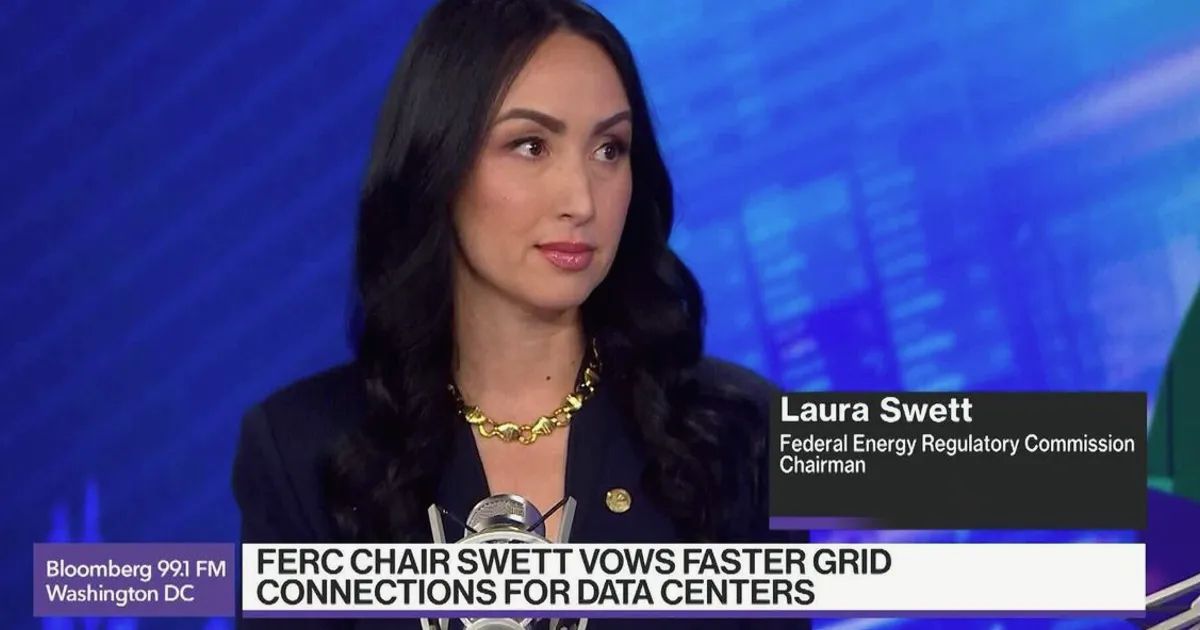
FERC Chair Laura Swett warned that the US electric grid is 'not going to work' for data centers without unprecedented interventionist measures. Speaking on Bloomberg's Balance of Power, Swett said connecting power-hungry data centers to the grid while protecting consumers will require aggressive regulatory action. The statement underscores mounting pressure on the nation's aging power infrastructure from the rapid expansion of artificial intelligence and cloud computing.
For energy commodity traders, the grid strain signals a structural shift in electricity demand that could tighten natural gas and coal markets. Data centers are expected to consume up to 9% of US electricity by 2030, up from about 3% today. This demand growth supports higher power prices and could increase reliance on natural gas-fired generation, even as renewables expand. Traders should monitor FERC policy developments, as any grid interconnection delays or new tariffs could alter regional power price spreads and fuel demand patterns. Check NowPrice's fuel page for current natural gas and electricity price context.
Looking ahead, FERC's stance suggests potential rule changes on grid interconnection and cost allocation for data centers. The agency may also revisit capacity market rules to ensure reliability. Market participants should watch for FERC orders on transmission planning and generator interconnection queues, which could signal the pace of new supply additions. The broader implication is that the energy transition and digitalization are converging, creating both risks and opportunities for energy markets.