




German Bond Yields Top 3% as Oil Rally Stirs Inflation Worries
German benchmark bond yields climbed above 3% for the first time in nearly a month as rising oil prices, fueled by Middle East tensions, stoked inflation expectations and pressured fixed-income markets.
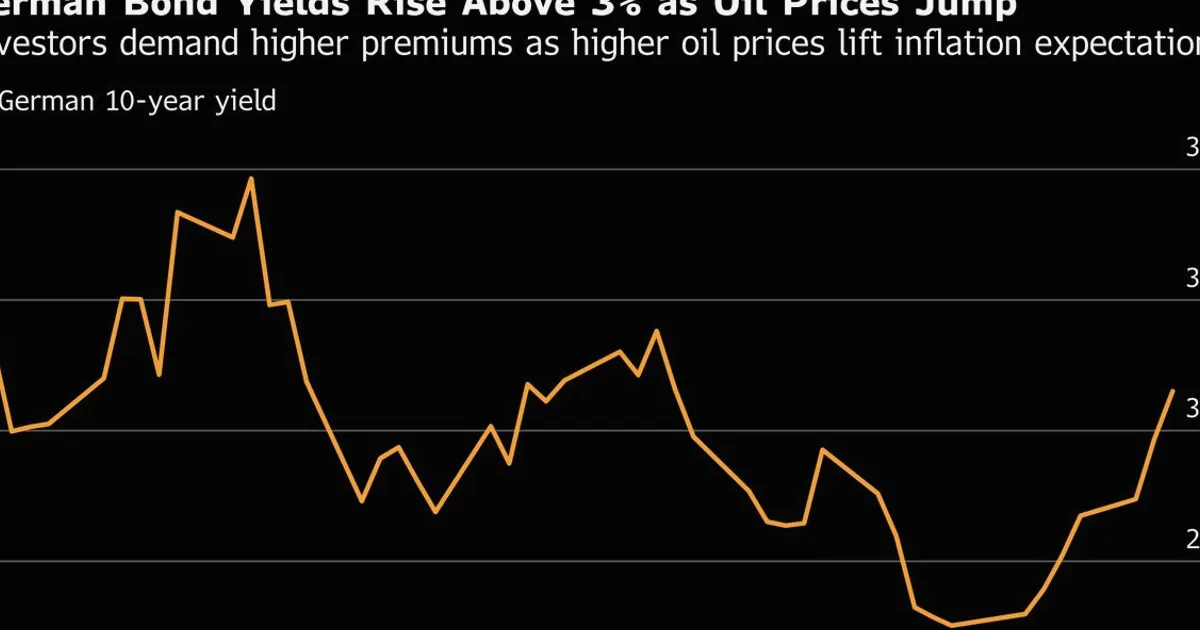
German benchmark bond yields climbed above 3% for the first time in nearly a month, as a flare-up in Middle East fighting lifted oil prices and stoked inflation expectations. The move reflects growing concern that higher energy costs could delay central banks' efforts to tame inflation, prompting a selloff in fixed-income assets across Europe. The yield on the 10-year German Bund rose to 3.02%, its highest since early February, as traders priced in a more hawkish European Central Bank. This bond selloff was mirrored across the eurozone, with French and Italian yields also rising.
For energy traders, the link between geopolitical risk and bond markets is a key signal. When oil prices spike due to supply disruptions, they feed into broader inflation measures, which in turn influence monetary policy expectations. Higher bond yields often strengthen the currency, making dollar-denominated oil more expensive for non-US buyers, potentially dampening demand. The Brent-WTI spread has widened to over $5 per barrel, reflecting differing regional supply risks. Meanwhile, US Strategic Petroleum Reserve levels remain near 40-year lows, limiting the government's ability to intervene. Crack spreads have surged as refinery margins improve, signaling that higher crude costs are being passed through to consumers. China's marginal demand remains a wildcard, with its economic recovery uneven. Saudi Arabia and Russia continue to coordinate production cuts, with OPEC+ spare capacity estimated at around 4 million barrels per day, providing a buffer but not enough to offset a major disruption. The oil futures curve has shifted into backwardation, indicating near-term supply tightness. Live fuel prices and charts on NowPrice show how the market is reacting to these cross-asset dynamics in real time.
Looking ahead, traders will watch for further escalation in the Middle East, particularly any disruption to oil flows through the Strait of Hormuz, through which about 20% of global oil passes. Key data releases include US crude inventories and OPEC+ production figures, which could either amplify or ease inflation fears. The 3% level on German Bunds will be closely monitored as a psychological threshold for fixed-income markets. A sustained break above this level could trigger further selling, while a retreat might signal that inflation fears are overblown. Any signs of diplomatic progress in the Middle East could quickly reverse the recent moves, but for now, the market remains on edge.