




Fed Will Stay Patient, Says Roth Capital Economist
Roth Capital chief economist Michael Darda expects the Federal Reserve to maintain a patient stance on monetary policy, with implications for rate-sensitive assets.
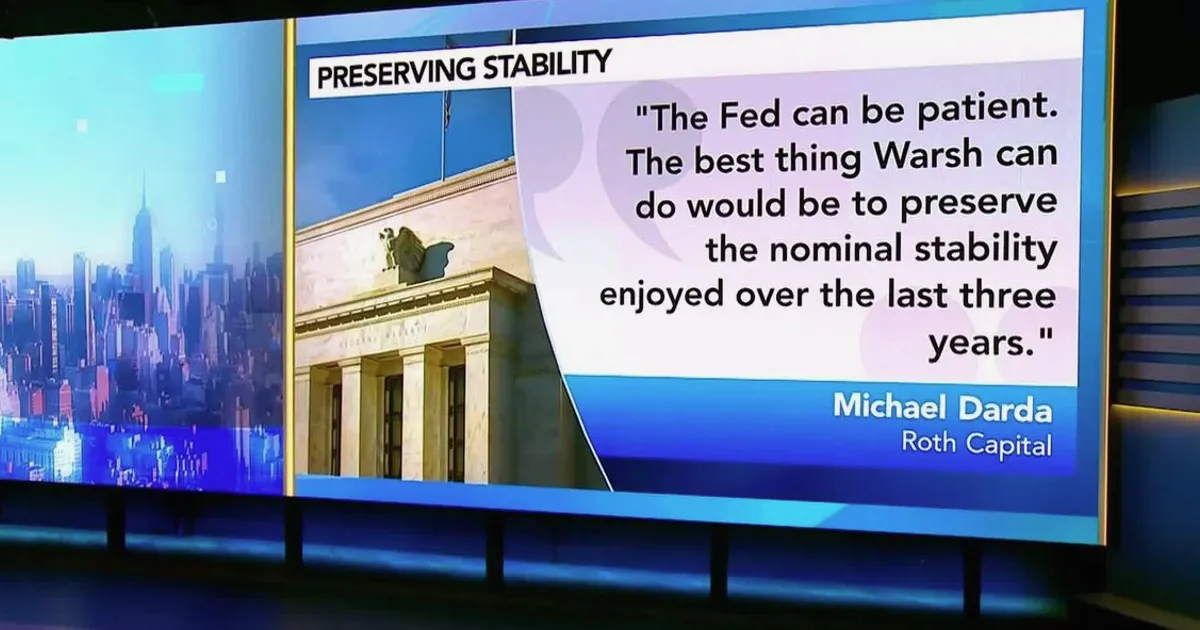
Roth Capital chief economist and macro strategist Michael Darda said the Federal Reserve will remain patient on monetary policy, signaling no imminent changes to interest rates. Speaking on Bloomberg Surveillance, Darda emphasized that the central bank is likely to hold steady as it assesses economic data. He also discussed a potential Supreme Court ruling regarding Fed Governor Lisa Cook, which could influence the central bank's composition. The Fed's dual mandate of maximum employment and price stability underpins its cautious approach, as officials weigh sticky inflation against a resilient labor market. Darda's view aligns with recent Fed commentary suggesting that the terminal rate may need to stay higher for longer, reinforcing the 'higher-for-longer' narrative that has shaped rate expectations since mid-2023.
The Fed's patient stance suggests that rate cuts are unlikely in the near term, which supports higher short-term yields and a flatter yield curve. For traders, this means that the current interest rate environment may persist, with the fed funds rate remaining elevated. A flatter yield curve often reflects market expectations of slower growth or tighter policy, and the term premium—the compensation investors demand for holding longer-dated bonds—remains compressed due to quantitative tightening and reduced balance-sheet duration. The Fed's ongoing balance-sheet runoff, at a pace of up to $95 billion per month, drains reserves and puts upward pressure on short-term funding rates, as seen in elevated SOFR and repo rates. Meanwhile, swap spreads have widened, indicating stress in the derivatives market as dealers hedge duration risk. The European Central Bank's transmission protection mechanism (TPI) serves as a contrast, showing how other central banks actively manage yield curve control to prevent fragmentation, while the Fed relies on forward guidance and rate adjustments.
Looking ahead, market participants will focus on upcoming inflation reports and employment data, which could shift the Fed's outlook. Any Supreme Court decision on Lisa Cook's position may also introduce political uncertainty. Traders should monitor these events for potential volatility in rate-sensitive instruments. A surprise inflation print could reprice rate expectations, while a weak jobs report might revive bets on a pivot. The yield curve's inversion, currently around -30 basis points between 2-year and 10-year Treasuries, could steepen if the Fed signals a cut, but Darda's patient stance suggests that inversion may persist. Check NowPrice's rates page for the latest pricing on fed funds futures and Treasury yields to gauge market expectations.