




French services PMI shows slower downturn in June, easing stagflation fears
France's services PMI for June came in below initial estimates but showed a slower pace of contraction, with output and new orders declining at the weakest pace since March.
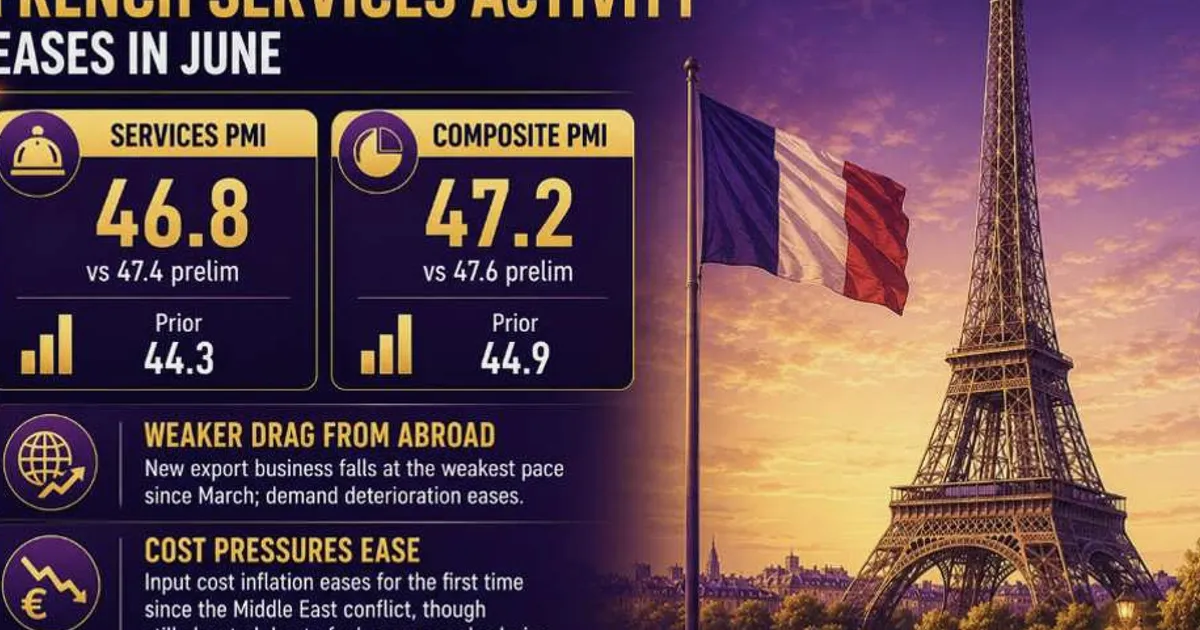
France's services sector continued to contract in June, but at a slower pace than in previous months, according to the final PMI reading. The index came in below initial estimates, yet the data confirmed that the downturn is easing, with output and new orders declining at the weakest rate since March. The improvement in business confidence and easing inflationary pressures provide some relief for European Central Bank policymakers, who have been monitoring the risk of stagflation. A softer decline in new export business also suggests that external demand is stabilizing, which could support the broader euro area economy. For traders, the data reduces the urgency for aggressive ECB rate cuts, as it signals that the economy may be bottoming out. Check NowPrice's rates page for the latest pricing on ECB rate expectations.
The significance of this data extends beyond France. The ECB operates under a dual mandate similar to the Federal Reserve, targeting price stability and supporting economic growth. With inflation easing but still above target, the ECB has been cautious about cutting rates prematurely. The slower contraction in services activity suggests that the economy may be bottoming out, reducing the risk of a deep recession. This also impacts yield curves and swap spreads across the euro area. A less dire outlook could steepen the yield curve as long-term rates rise on improved growth expectations, while short-term rates remain anchored by ECB policy. The ECB's Transmission Protection Instrument (TPI) remains a backstop against unwarranted bond market fragmentation, but improving fundamentals reduce the need for its activation. For fixed-income traders, the data implies that aggressive rate cut bets may be overdone, as the economy shows signs of stabilization.
Looking ahead, markets will focus on upcoming euro area inflation and GDP releases to gauge whether the recovery is sustainable. The ECB's next policy decision in July will be closely watched for any shift in tone, especially if the data continues to show a gradual improvement in activity. Key indicators include the euro area composite PMI, which will provide a broader view of the economy, and the German Ifo business climate index. Additionally, the ECB's quarterly bank lending survey will offer insights into credit conditions. If the recovery gains traction, the ECB may push back against market expectations for rate cuts, potentially leading to a repricing of short-term rates. Conversely, any deterioration in the data could revive stagflation fears and prompt the ECB to signal a more accommodative stance. Traders should monitor these releases closely, as they will determine the path of euro area bond yields and the euro exchange rate.