




Lagarde Says European Banking System More Resilient to Shocks
ECB President Lagarde stated the European banking system is more resilient to external shocks due to an improved financial framework and progress on the green transition, speaking at the ECB's annual retreat in Sintra.
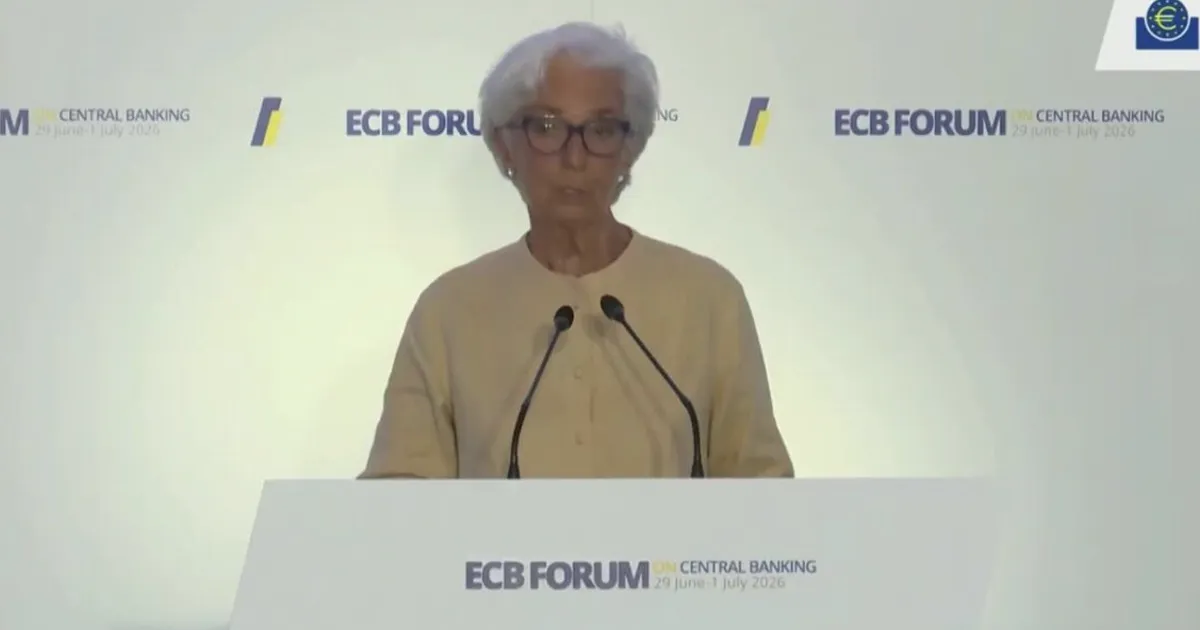
European Central Bank President Christine Lagarde said the European banking system has become more resilient to external shocks, citing an improved financial framework and progress on the green transition. She made the remarks during the ECB's annual retreat in Sintra, Portugal, a key event where policymakers discuss the economic outlook. Lagarde's comments come as the ECB continues to navigate a complex monetary policy landscape, balancing its primary mandate of price stability with financial stability considerations. The banking sector's resilience is partly attributed to strengthened capital buffers and enhanced supervision post-2008, which have reduced the likelihood of systemic failures during periods of market stress.
The statement comes amid ongoing adjustments in the euro-area interest rate environment. A more resilient banking sector reduces the risk of credit crunches that could amplify the impact of ECB rate decisions. For traders monitoring rate differentials, a stable banking system supports the transmission of monetary policy, meaning rate changes are more likely to pass through to lending conditions as intended. This is particularly relevant given the ECB's Transmission Protection Instrument (TPI), designed to prevent unwarranted fragmentation in bond markets. A robust banking sector also helps maintain the effectiveness of the yield curve as a signaling mechanism for future economic activity, as banks are more willing to lend across maturities. This can influence expectations for the ECB's next moves on its deposit rate and the path of the yield curve, especially as the term premium on long-term bonds reflects both inflation and growth expectations.
Market participants will watch for further details from the Sintra retreat, including any remarks on inflation trends or the economic outlook. The ECB's next policy meeting will be closely scrutinized for signals on the pace of rate adjustments, especially as the green transition and financial stability remain key themes. Investors will also assess how the ECB balances its dual objectives of price stability and financial stability, particularly in light of potential yield curve inversions that could signal recession risks. The resilience of the banking system may reduce the need for aggressive rate cuts, but persistent inflation could still prompt further tightening. Any discussion of balance sheet normalization or swap spreads will be closely watched for clues on liquidity conditions and the broader monetary policy stance.