




Lagarde Sees No Need for Stronger ECB Response to War
ECB President Lagarde stated the central bank does not need to intensify its policy response to the Middle East conflict, as inflation is expected to return to target over the medium term.
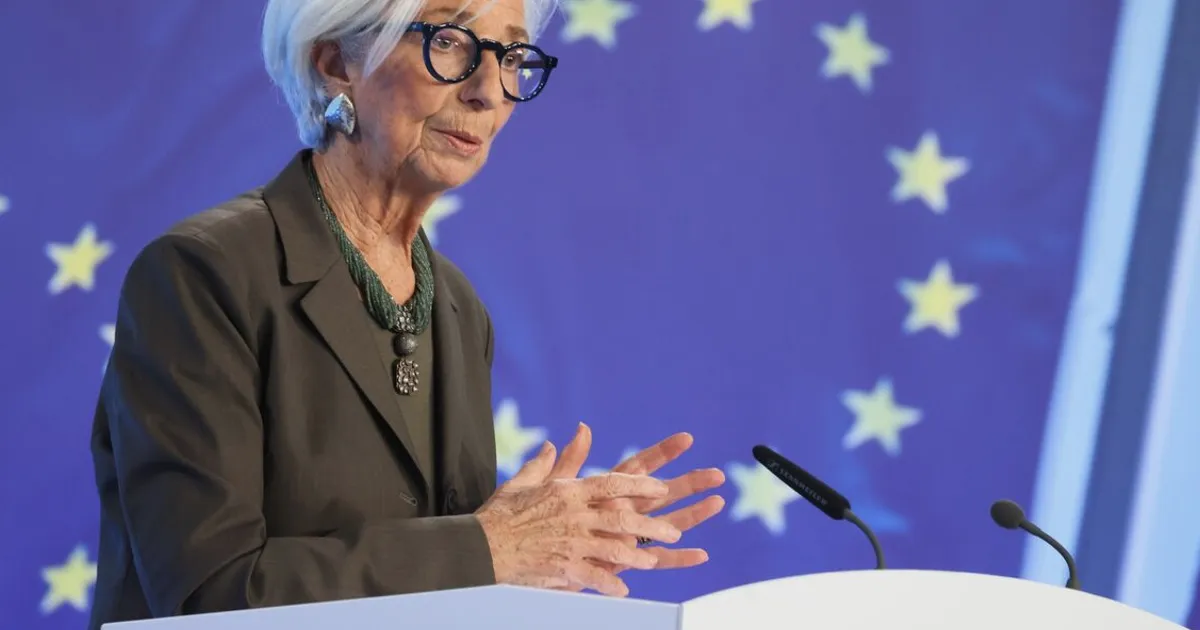
European Central Bank President Christine Lagarde said the institution does not need to respond more forcefully to the economic fallout from the Middle East conflict, as inflation is on track to return to its 2% target over the medium term. Speaking on Monday, Lagarde emphasized that the current monetary policy stance remains appropriate despite geopolitical uncertainty. The ECB’s assessment suggests that the war’s impact on energy prices and supply chains has been contained, reducing the need for aggressive rate action. For traders monitoring interest rate differentials, Lagarde’s comments reinforce expectations that the ECB will hold rates steady in the coming months, diverging from the Federal Reserve’s potential easing cycle. Live rates and yield curve data on NowPrice show how markets are pricing in this divergence, with the eurozone yield curve steepening slightly as short-term rate hike bets fade.
The ECB’s cautious stance reflects its analysis of the transmission mechanism, where higher energy costs have not yet triggered broad-based second-round effects on wages and services inflation. Unlike the Fed, which operates under a dual mandate of price stability and maximum employment, the ECB’s single mandate focuses on inflation. This difference explains why the ECB may tolerate a slower adjustment even as the Fed considers cuts. The yield-curve inversion in the eurozone has narrowed, suggesting that term-premium decomposition is shifting as investors reassess long-run growth prospects. Meanwhile, swap spreads remain stable, indicating that liquidity conditions are not deteriorating. The ECB’s Transmission Protection Instrument (TPI) also provides a backstop against unwarranted fragmentation, allowing Lagarde to maintain a patient approach without risking financial dislocation.
Looking ahead, the key data points to watch include eurozone inflation readings for June and the ECB’s quarterly staff projections in September. If inflation proves stickier than anticipated, Lagarde’s stance could shift. For now, the central bank appears comfortable waiting for more clarity on the conflict’s economic trajectory before adjusting policy. Traders should also monitor the Fed’s balance-sheet runoff, as a faster reduction in US Treasury holdings could widen rate differentials and put pressure on the euro. Any escalation in the Middle East that disrupts energy supplies would test the ECB’s resolve, potentially forcing a more forceful response despite Lagarde’s current assessment.