




Five Charts Show Rising Yields Reshaping Japanese Markets
Rising Japanese government bond yields now reflect not only policy normalization but also the risk of excessive inflation, reshaping market dynamics in Japan.
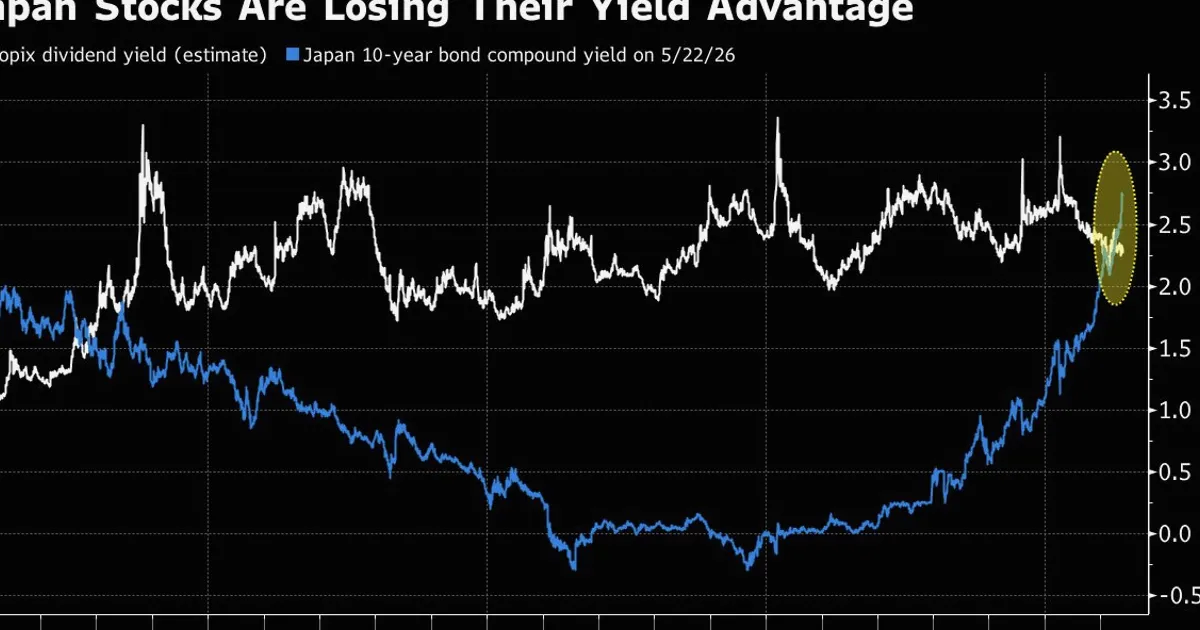
A new phase is emerging in Japan's financial markets, where rising bond yields are no longer solely a sign of healthy monetary policy normalization but also a warning that inflation may overshoot. Five key charts illustrate how this shift is reshaping everything from government debt dynamics to equity valuations and currency trends.
The first chart tracks the yield on 10-year Japanese government bonds (JGBs), which has climbed to levels not seen in over a decade. Historically, higher yields in Japan were associated with economic recovery and the Bank of Japan's gradual exit from ultra-loose policy. However, the second chart shows that breakeven inflation rates — a market-based measure of expected inflation — have also risen sharply, suggesting that investors are pricing in sustained price pressures. The third chart highlights the impact on Japan's banking sector: rising yields improve net interest margins for lenders, boosting bank stocks. Yet the fourth chart reveals that the yen has weakened rather than strengthened, as yield differentials with the US remain wide, complicating the BOJ's policy path. The fifth chart shows that foreign investors have increased their holdings of JGBs, betting on further yield normalization.
For traders focused on interest rates and central bank policy, this shift matters because it challenges the long-held assumption that Japanese yields would remain anchored near zero. The BOJ now faces a delicate balancing act: allowing yields to rise too fast could destabilize the government's debt-servicing costs, while keeping them too low risks fueling asset bubbles and inflation. The widening spread between JGB yields and those in other developed markets also affects global capital flows, as Japanese investors may repatriate funds or seek higher returns abroad. For real-time levels on JGB yields and related instruments, NowPrice provides up-to-the-minute quotes.
Looking ahead, market participants will closely watch the BOJ's July policy meeting for any adjustments to its yield curve control framework. Key data points include the June national CPI release, which will test whether inflation is becoming entrenched. The government's next fiscal stimulus package could also influence bond supply expectations. If yields continue to climb, the BOJ may be forced to accelerate its tapering of bond purchases, a move that would have significant implications for global bond markets.