




UK foreign minister urges Iran-Israel restraint, S&P futures extend losses
UK Foreign Minister Yvette Cooper called for restraint between Iran and Israel, while S&P 500 and Nasdaq futures fell 0.6% and 0.7% respectively, extending Friday's losses.
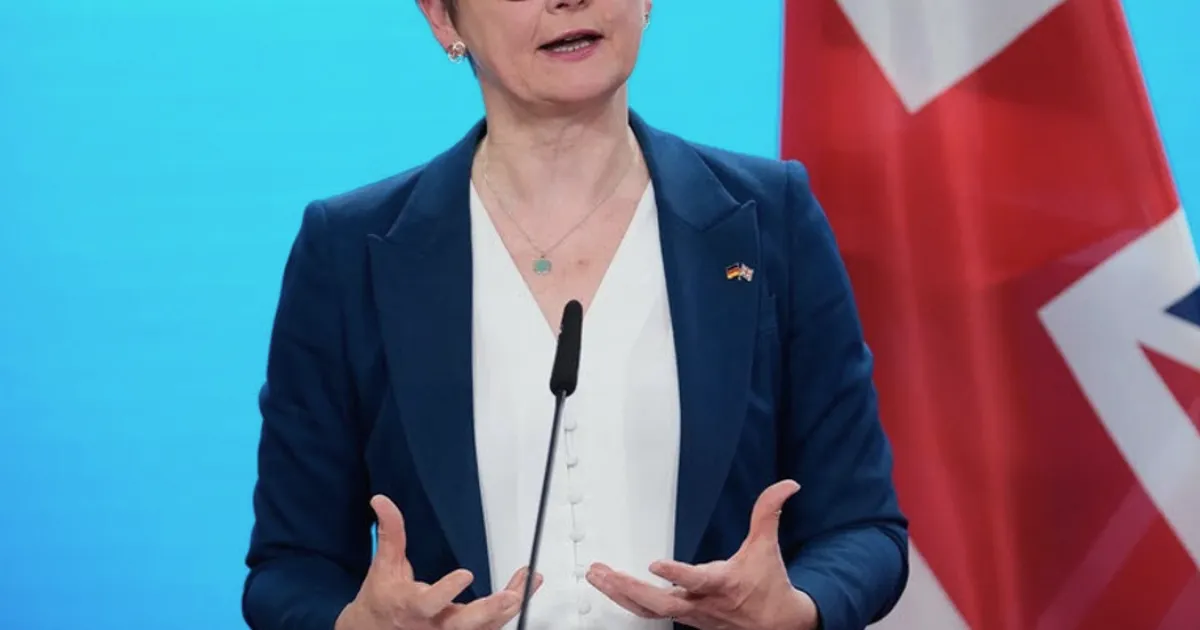
UK Foreign Minister Yvette Cooper has called for restraint and immediate de-escalation between Iran and Israel, warning that further conflict is in no one's interest. The comments come amid heightened tensions in the Middle East, though their market impact appears limited given Britain's diminished influence in the region. The geopolitical backdrop adds to uncertainty in global markets, where investors are already grappling with the Federal Reserve's dual mandate of price stability and maximum employment, as well as the lagged effects of the most aggressive tightening cycle in decades. The yield curve has been inverted for over a year, historically a reliable recession signal, though some argue this time the inversion reflects term-premium compression rather than pure recession risk.
S&P 500 futures fell 0.6% and Nasdaq futures dropped 0.7% on Monday, adding to Friday's rout as geopolitical risks weigh on risk sentiment. The moves reflect broader concerns about potential supply disruptions and safe-haven flows, with traders monitoring the situation closely. On NowPrice, live futures prices and charts show the extent of the sell-off in real time. The equity sell-off has been accompanied by a flight to quality in Treasuries, with the 10-year yield falling as swap spreads tighten, indicating reduced counterparty risk. Meanwhile, the European Central Bank's Transmission Protection Instrument (TPI) remains on standby to prevent unwarranted fragmentation in eurozone bond markets, though no activation has been needed so far.
Looking ahead, market participants will focus on any further diplomatic developments and potential retaliation between the two nations. Key levels to watch include the S&P 500's recent support zone, while a sustained escalation could trigger further risk-off moves across equities and commodities. The Fed's balance sheet runoff, which has reduced reserves by over $1 trillion, may amplify any liquidity stress, while the term premium in long-dated bonds could rise if geopolitical risks persist. Traders will also monitor swap spreads and the shape of the yield curve for clues on how the fixed-income market is pricing in the evolving risk landscape.