




China Consumer Spending Falls for First Time Since Pandemic
China's consumer spending contracted for the first time since the pandemic, while investment weakened, underscoring persistent domestic risks despite strong exports and easing geopolitical tensions.
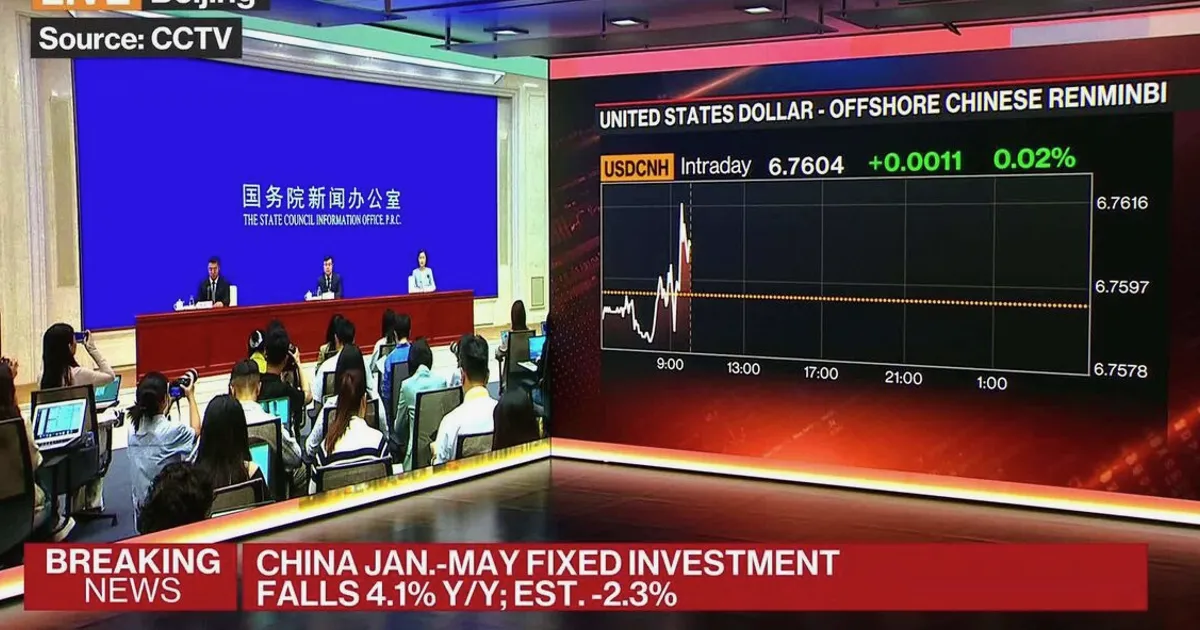
China's consumer spending contracted in May for the first time since the pandemic, while investment growth slowed, signaling persistent headwinds for the world's second-largest economy even as exports remain robust and geopolitical tensions ease.
Consumer spending, a key driver of China's economic growth, fell 0.3% year-on-year in May, according to data released Tuesday. Fixed-asset investment also missed expectations, rising only 4.2% year-to-date versus the 4.5% forecast. The data underscore the fragility of domestic demand, as households remain cautious amid a prolonged property downturn and weak job market. Meanwhile, exports have been a bright spot, surging 15% in May, supported by global demand and a weaker yuan. The de-escalation of tensions around Iran has also reduced some external uncertainty.
For equity investors, the weak consumption data raises concerns about corporate earnings growth, particularly for companies reliant on domestic discretionary spending. Sectors such as consumer staples, retail, and real estate may face headwinds, while exporters could continue to benefit. The divergence between strong exports and weak domestic demand suggests a two-speed economy, which could lead to further policy stimulus from Beijing. Investors should monitor upcoming data on industrial production and retail sales for confirmation of the trend. NowPrice offers real-time quotes for China A-shares and Hong Kong-listed stocks to track market reactions.
Looking ahead, the key question is whether the Chinese government will introduce additional fiscal or monetary measures to shore up consumption. Potential steps include increased infrastructure spending, further rate cuts, or targeted subsidies for households. The next Politburo meeting in July will be closely watched for policy signals. Global investors will also keep an eye on the yuan's trajectory, as a weaker currency could boost exports but also fuel capital outflows. The data adds to the case for a more accommodative policy stance, but the timing and scale of any stimulus remain uncertain.