




Retail Revival Adds Fuel to US Stocks, JPMorgan Strategists Say
JPMorgan strategists say retail investors' share of US equity trading is set to rebound from a four-year low, potentially providing a fresh tailwind for stocks.
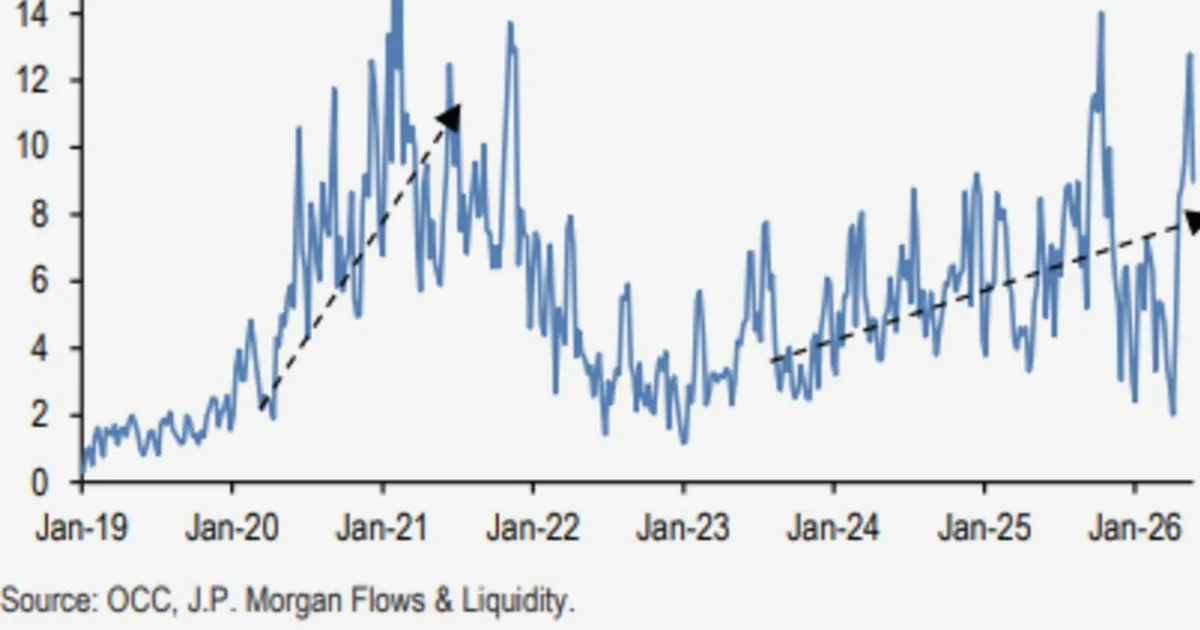
Retail investors are poised to increase their presence in US equity markets, according to JPMorgan Chase & Co. strategists, who see the group's share of trading rebounding from a four-year low reached at the end of the first quarter. This revival could provide a fresh tailwind for stocks, adding to the momentum from institutional flows and corporate buybacks.
The strategists, led by Nikolaos Panigirtzoglou, noted that retail investors' share of US equity trading had fallen to around 15% by late March, the lowest since 2022. However, recent data suggests a turnaround, with retail activity picking up in April and May. The rebound is attributed to improved market sentiment, lower volatility, and a shift in retail portfolios toward equities after a period of underperformance. If sustained, this could boost demand for stocks, particularly in sectors favored by retail traders such as technology and consumer discretionary.
For equity traders, the return of retail participation is significant because it often correlates with increased trading volumes and momentum-driven moves. Retail investors tend to amplify trends, buying into rallies and selling during dips, which can create short-term opportunities. However, their influence can also lead to sharper reversals if sentiment shifts abruptly. Traders should monitor retail flow data and options activity for clues on positioning. NowPrice's stocks page provides real-time pricing and volume data to help track these dynamics.
Looking ahead, the key question is whether the retail revival has staying power. The strategists point to factors such as the trajectory of interest rates, corporate earnings, and the broader economic outlook. If the Federal Reserve signals a pause or cut in rates later this year, it could further encourage retail participation. Conversely, a resurgence of inflation or geopolitical tensions might dampen risk appetite. Investors will also watch for seasonal patterns, as retail activity often dips during summer months before picking up in the fall.