




Warsh Debut Sparks Surge in Rate-Hike Bets, Bond Yields Jump
New Fed Chair Kevin Warsh signaled aggressive inflation fighting in his debut press conference, sending bond yields surging and traders piling into bets on a rate hike as soon as next month.
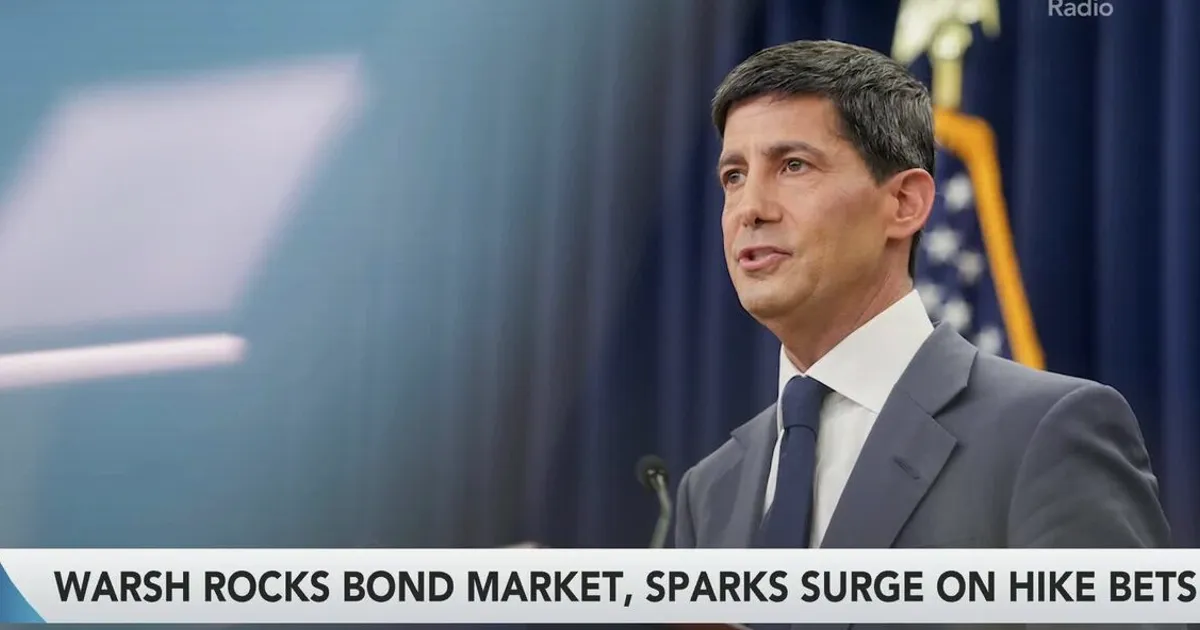
New Federal Reserve Chair Kevin Warsh sent shockwaves through bond markets during his debut press conference, signaling an aggressive stance against inflation that prompted traders to ramp up bets on an interest-rate hike as soon as next month. The 2-year Treasury yield surged 15 basis points to 4.85%, its largest one-day move since March 2020, as fed funds futures repriced the probability of a 25-basis-point hike at the June FOMC meeting to 45%, up from 20% before the speech. This hawkish pivot marks a sharp departure from the gradual approach of his predecessor, and the rapid repricing of rate expectations introduces fresh headwinds for growth stocks, which are most sensitive to higher discount rates. The S&P 500 futures slipped 0.6% in after-hours trading, with the tech-heavy Nasdaq 100 futures falling 0.9%, as the earnings yield on the S&P 500 (now 3.8%) narrowed further relative to the 10-year Treasury yield (4.5%), compressing the equity risk premium to its lowest since 2007. NowPrice real-time quotes show the S&P 500 futures slipping as the market digests the implications of a more aggressive Fed.
For equities traders, the rapid repricing of rate expectations introduces fresh headwinds for growth stocks, which are most sensitive to higher discount rates. The S&P 500's forward P/E has contracted from 21x to 19.5x over the past week, and breadth indicators show only 35% of stocks trading above their 50-day moving average, suggesting a narrowing market. Sector rotation is underway, with financials and energy outperforming as higher rates boost net interest margins and commodity prices, while technology and consumer discretionary lag. Buyback yields, which had been supporting equities, may face headwinds as higher borrowing costs reduce corporate appetite for share repurchases. Options-implied volatility, as measured by the VIX, spiked 3 points to 18.5, reflecting increased hedging demand. The Fed model, which compares earnings yield to bond yields, now signals that stocks are less attractive relative to bonds, historically a precursor to lower equity returns.
Looking ahead, markets will focus on upcoming economic data, particularly inflation readings and employment figures, to gauge the pace of potential rate hikes. The next FOMC meeting in July will be closely watched for any formal policy shift. Traders should also monitor Warsh's future communications for further clues on the Fed's reaction function under his leadership. Key levels to watch include the 2-year yield at 5% and the S&P 500's 200-day moving average near 4,200, which could act as support if selling intensifies. A break below that level could trigger further downside, while a dovish pivot in data or rhetoric might stabilize markets.